
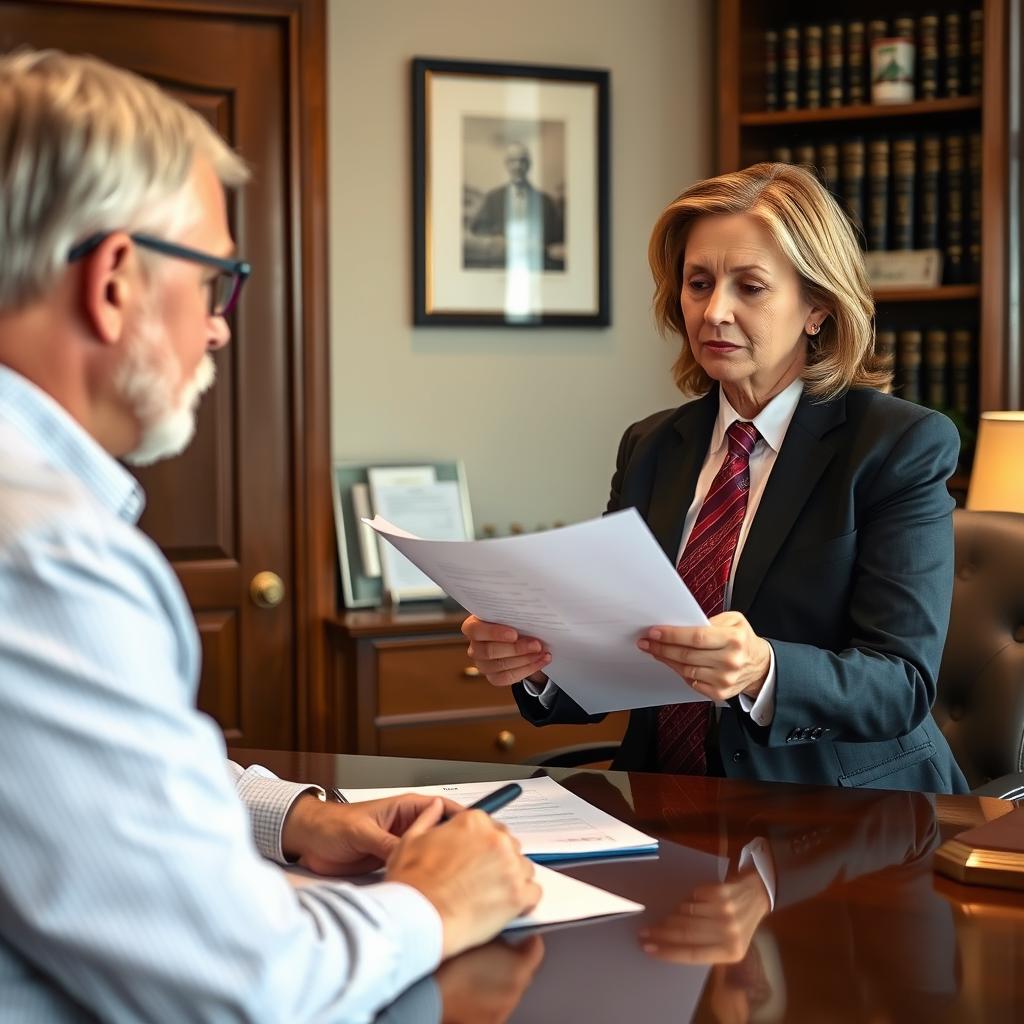
Real Estate Division Lawyer Caroline County — How Is Property Divided in a Divorce?
Dividing real estate in a Caroline County divorce is governed by Virginia’s equitable distribution law, Va. Code § 20-107.3. Law Offices Of SRIS, P.C. has 11 documented case results in Caroline County. A Real Estate Division Lawyer Caroline County can protect your interest in the marital home, investment properties, and land. Contact us for a case-specific approach.
Virginia Law on Dividing Real Estate in Divorce
Virginia is an equitable distribution state, not a community property state. This means marital property, including real estate, is divided fairly but not necessarily equally. The court follows Va. Code § 20-107.3, which provides a detailed framework for classifying and valuing property before making a division. The statute considers whether property is marital, separate, or hybrid. Marital property includes most assets acquired during the marriage, while separate property typically includes assets owned before marriage or received by gift or inheritance.
Last verified: April 2026 | Caroline County Circuit Court | Virginia General Assembly
Founded in 1997 by former prosecutor Mr. Sris, our firm brings deep experience to complex property division cases. Mr. Sris personally played a key role in amending the very statute that governs this process, providing unique insight into its application.
Official Legal Resources
For the full text of the law, review Va. Code § 20-107.3 (official Virginia General Assembly site). Caroline County family law matters are heard at the Caroline County Circuit Court.
Caroline County Procedures for Property Division
In Caroline County, the division of real estate is a central part of any divorce involving property. The court must first classify all assets. For a home division in divorce lawyer Caroline County clients trust, understanding local procedure is key. The Caroline County Circuit Court at 111 Ennis Street handles these cases. Judges here are familiar with valuing rural land, farms, and residential properties common in the area.
- File for Divorce: The process begins with filing a Complaint for Divorce in Caroline County Circuit Court, which must include a request for equitable distribution.
- Financial Disclosure: Both parties must file detailed financial statements, listing all assets and debts, including real estate.
- Property Classification: The court classifies each piece of real estate as marital, separate, or part marital/part separate.
- Valuation: Real estate is appraised to determine its fair market value. The marital share is the equity accrued during the marriage.
- Division Decision: The court applies the statutory factors to decide on a fair division, which may involve selling the property, one spouse buying out the other, or awarding the property to one spouse with an offsetting award to the other.
Potential Outcomes in a Property Split
In Caroline County, a property split lawyer Caroline County can help you handle outcomes like a buyout, sale, or co-ownership.
| Division Method | How It Works | Common For |
|---|---|---|
| Buyout | One spouse keeps the property and pays the other spouse their share of the equity. | Marital home where children remain. |
| Sale and Split | The property is sold, and the net proceeds are divided according to the court’s order. | Investment properties or when neither spouse can afford a buyout. |
| Co-ownership | Ex-spouses retain joint ownership for a period, often until children reach adulthood. | Families seeking stability for children. |
| Offsetting Award | One spouse gets the real estate; the other gets assets of equivalent value from the marital estate. | Estates with other liquid assets like retirement accounts. |
Results may vary. Prior results do not guarantee a similar outcome.
Why Choose Our Firm for Your Real Estate Division
Law Offices Of SRIS, P.C. was founded in 1997 and brings over 120 years of combined legal experience to every case. Our deep knowledge of Virginia’s equitable distribution system is anchored by Mr. Sris’s personal involvement in amending Va. Code § 20-107.3. We understand that dividing a home or land is more than a financial transaction; it’s deeply personal. Our team, including attorney Samantha Powers, provides full representation focused on achieving a stable outcome for your future.
Samantha Rae Powers, Associate Attorney at Law Offices Of SRIS, P.C. — Licensed in VA, FL. Experienced family law and civil litigator. View Samantha Rae Powers’s Profile
Documented Case Results in Caroline County
Our firm has a record of achieving positive outcomes for clients in Caroline County courts. We have 11 total documented case results across all practice areas in the locality. For instance, our team has successfully handled cases involving the dismissal of serious charges in Caroline County Circuit Court, demonstrating our litigation capability in the venue where property division disputes are decided.
Results may vary. Prior results do not guarantee a similar outcome.
Secondary attorney Mr. Sris, the firm’s founder and a former prosecutor, provides strategic oversight on complex cases. His background in accounting and information systems offers a distinct advantage in untangling financial matters like property valuation.
Contact Our Caroline County Real Estate Division Lawyers
Our Fairfax location serves clients at the Caroline County courts. We are accessible via I-95, Route 1, and Route 301, serving neighborhoods in Bowling Green and Carmel Church.
Real estate division lawyer near Caroline County Circuit Court.
Law Offices Of SRIS, P.C.
4008 Williamsburg Ct, Fairfax, VA 22032
Toll-Free: (888) 437-7747 | Local: (703) 636-5417
By appointment only.
24/7 phone consultations — (888) 437-7747 — meetings by appointment only.
Frequently Asked Questions
How is the marital home divided in a Virginia divorce?
It depends. The court classifies the home as marital or separate property, determines its equity, then applies equitable distribution factors under Va. Code § 20-107.3. Common outcomes include a buyout by one spouse, a sale with split proceeds, or co-ownership for a set time.
Who gets the house in a divorce with children in Caroline County?
No one is automatically awarded the house. The child’s best interest is a key factor. Often, the primary custodial parent may remain in the home temporarily for stability, but the court must still decide long-term ownership as part of the overall property split.
What if my spouse owned the home before we married?
It depends. The pre-marriage value is typically separate property. However, any increase in equity during the marriage due to mortgage payments (from marital funds) or substantial improvements may be considered marital property subject to division.
Can I be forced to sell our home in a divorce?
Yes. If neither spouse can afford to buy out the other and co-ownership is not feasible, the court can order the property sold and the proceeds divided equitably. A property split lawyer Caroline County can negotiate alternatives to avoid a forced sale.
How is a mortgage handled during property division?
The mortgage is a marital debt. The spouse who keeps the house usually assumes responsibility for the mortgage. The other spouse may need to be removed from the loan, which often requires refinancing by the retaining spouse.
Related Legal Help in Caroline County
If you are facing a divorce, you may also need guidance on: Criminal Defense Lawyer Caroline County, DUI/DWI Lawyer Caroline County, or Personal Injury Lawyer Caroline County. For more information on family law across Virginia, visit our Virginia Family Law hub page. We also assist clients in neighboring areas like Fairfax County and Prince William County.
Last verified: April 2026. Laws change — contact Law Offices Of SRIS, P.C. at (888) 437-7747 for current guidance.