
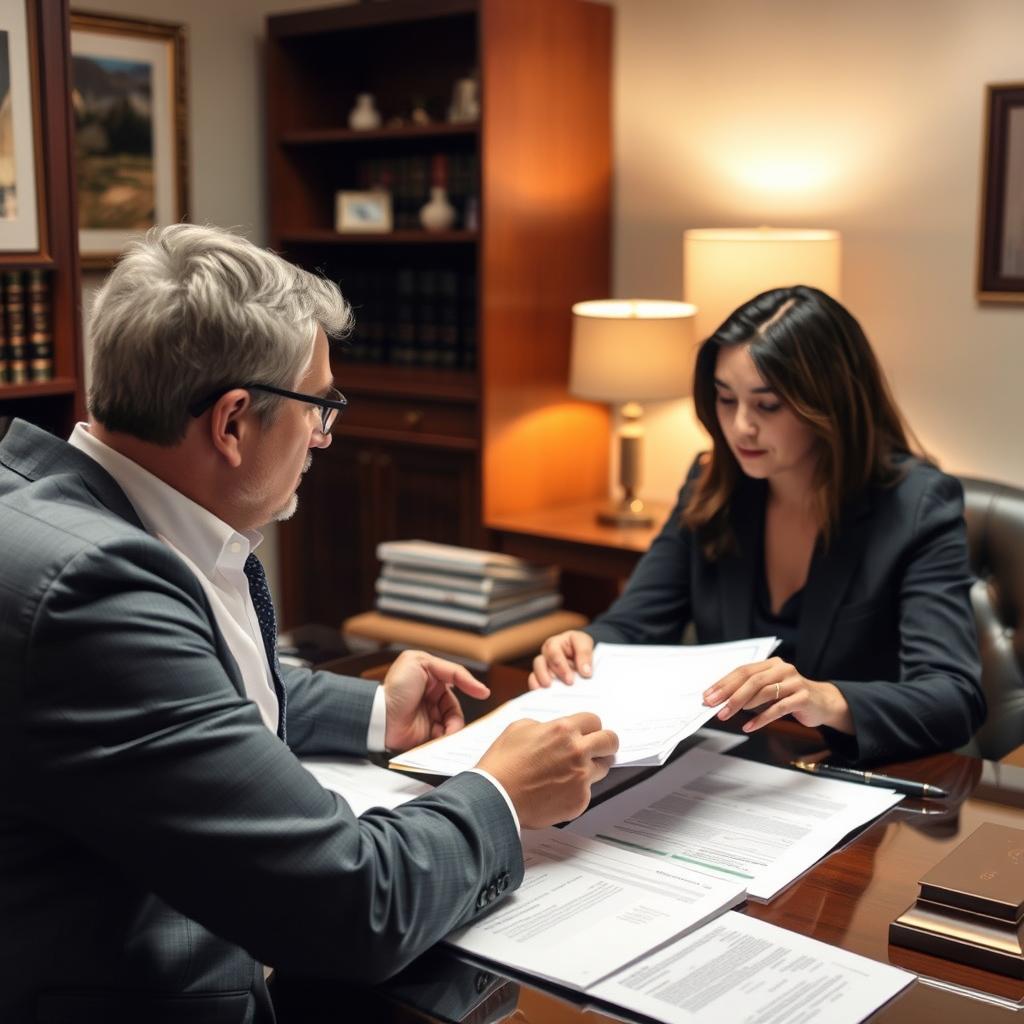
Postnuptial Agreement Lawyer Schenectady County, NY
Married couples in Schenectady County who want to clarify financial rights and responsibilities without ending their marriage often turn to a postnuptial agreement. Law Offices Of SRIS, P.C. represents clients in drafting, reviewing, negotiating, and enforcing postnuptial agreements throughout the Capital District, including Schenectady, Niskayuna, Rotterdam, Scotia, Duanesburg, and Glenville. Mr. Sris and his Of Counsel team bring over 120 years of combined legal experience to family law matters, and they understand the distinctive legal landscape of Schenectady County’s Supreme Court. Results may vary. A well‑crafted postnuptial agreement can address property classification, spousal support, and the division of assets in the event of separation or divorce, while also providing clarity and reducing conflict. To discuss whether a postnuptial agreement is appropriate for your circumstances, reach Law Offices Of SRIS, P.C. at (888) 437‑7747. Law Offices Of SRIS, P.C. – Advocacy Without Borders.
What a Postnuptial Agreement Means in Schenectady County
Under New York law, a postnuptial agreement is a written contract entered into by spouses after marriage that sets forth how property, debts, and spousal maintenance will be handled if the marriage ends. The agreement becomes part of the broader equitable‑distribution framework governed by the New York Domestic Relations Law. For residents of Schenectady County, matters involving the enforcement or challenge of a postnuptial agreement are typically heard in the New York Supreme Court, Schenectady County, located at 612 State Street in Schenectady. The court sits within the 4th Judicial District and has general original jurisdiction over matrimonial actions, including those that turn on the validity of a postnuptial agreement.
Schenectady County’s legal community — from the Supreme Court to the support magistrates who handle ancillary issues — works within the same statutory scheme as the rest of the state, but local practice informs how postnuptial‑agreement issues are presented. The court will examine whether the agreement was entered into voluntarily, with full financial disclosure, and without overreaching. Counsel who regularly appear in Schenectady County understand the judicial expectations around these factors, and they can present the agreement in a manner that reflects the parties’ genuine intentions. While the law does not require that a postnuptial agreement be filed with the court unless it is being enforced or challenged, having an experienced lawyer familiar with the Schenectady County Supreme Court helps ensure the document stands up to scrutiny later.
How Mr. Sris and His Of Counsel Handle Postnuptial Agreement Cases
Mr. Sris and his Of Counsel approach every postnuptial‑agreement matter with the recognition that the document will govern important financial outcomes. They begin by consulting with the client to understand the couple’s overall situation, the specific assets and liabilities at stake, and the goals each spouse hopes to accomplish. When representing the party who will be bound by the agreement, they review the proposed terms for fairness and compliance with New York’s requirements — paying close attention to whether full financial disclosure has been made and whether the agreement was signed freely. When representing the party who seeks to uphold the agreement, they work to document the negotiation process, confirm disclosure, and structure the final writing so that it satisfies the standards a court would apply.
If a postnuptial agreement becomes the subject of a dispute — for instance, during a later divorce or separation action — Mr. Sris and his Of Counsel represent clients in motions to enforce, motions to set aside, and related equitable‑distribution proceedings in the Schenectady County Supreme Court. Because postnuptial‑agreement challenges can be fact‑intensive, they focus on developing a clear record, identifying the applicable legal standard, and advocating the client’s position through motion practice and, when necessary, trial. Their familiarity with the procedural rhythms of the 4th Judicial District helps clients anticipate what to expect and move the matter forward efficiently.
About Mr. Sris and His Of Counsel Team
Mr. Sris, Owner and Founder of Law Offices Of SRIS, P.C., has practiced family law since the firm’s founding in 1997. He is admitted in Virginia, Maryland, the District of Columbia, New Jersey, and New York, and he brings the perspective of a former prosecutor to his family‑law practice. Mr. Sris testified before the Virginia House Courts of Justice Committee in support of 2019 HB 635 (chief patron Del. David Bulova). His thorough understanding of statutory frameworks and court procedure informs his work on postnuptial agreements and related matrimonial matters.
The firm’s Of Counsel attorneys — all engaged through Excella — collaborate with Mr. Sris on family‑law cases, drawing on their own extensive experience. Together, Mr. Sris and his Of Counsel bring over 120 years of combined legal experience, and they have documented 4,739+ case results across all practice areas since 1997. Results may vary. The team is available to meet by appointment at the firm’s New York location: 50 Fountain Plaza, Suite 1400, Office No. 142, Buffalo, New York 14202. For clients in Schenectady County, consultations can be arranged by phone and, when appropriate, through remote conferencing.
Frequently Asked Questions
What is a postnuptial agreement in New York?
A postnuptial agreement is a written contract signed by spouses after marriage that establishes how property, debts, and spousal support will be handled if the marriage ends. Unlike a prenuptial agreement, it is entered into during the marriage, not before. In New York, such agreements are governed by the Domestic Relations Law and general contract principles. A valid postnuptial agreement must be entered into voluntarily, with full disclosure of assets and liabilities, and the terms must not be unconscionable. When properly executed, the agreement can simplify a future divorce by resolving financial issues in advance.
Do postnuptial agreements need to be filed with the court in Schenectady County?
A postnuptial agreement does not need to be filed with the court unless one spouse seeks to enforce it or challenge its terms in a legal proceeding. Until a divorce, annulment, or separation action is commenced in Schenectady County Supreme Court, the agreement remains a private contract between the spouses. If either party later asks the court to uphold or invalidate the agreement, it will be submitted as part of that case. Keeping the agreement safely stored but accessible is prudent.
Can a postnuptial agreement be challenged in New York?
Yes, a postnuptial agreement can be challenged if it was signed under duress, without adequate financial disclosure, or if its terms are unconscionable. New York courts examine whether each spouse had the opportunity to consult independent counsel and whether any overreaching occurred. A party seeking to set aside the agreement carries the burden of proving a defect. Working with an experienced lawyer during the drafting stage helps reduce the risk of a future successful challenge.
Do I need a lawyer to create a postnuptial agreement in Schenectady County?
New York law does not require you to have a lawyer to create a postnuptial agreement, but having one helps protect your interests. Both spouses are strongly encouraged to have independent legal representation. A lawyer can ensure that the agreement complies with New York law, addresses all relevant property and support issues, and minimizes the risk of a later claim that the agreement was unfair. Even if the other spouse already has a lawyer, obtaining your own counsel is advisable.
How does a postnuptial agreement affect divorce in Schenectady County?
A valid postnuptial agreement can resolve many of the financial disputes that arise in a divorce, such as property division and spousal maintenance, without the need for a court hearing on those issues. The Schenectady County Supreme Court will generally enforce the agreement unless a successful challenge is made. This can streamline the divorce process and allow the parties to focus on unresolved matters, including custody and visitation. The agreement is incorporated into the judgment of divorce.
What makes a postnuptial agreement enforceable in New York?
To be enforceable, a New York postnuptial agreement must be in writing, signed by both spouses, and accompanied by fair and reasonable financial disclosure. The court will look at whether each spouse had the opportunity to consult with an attorney, whether the agreement was executed voluntarily, and whether its terms are not manifestly unfair. A well‑drafted agreement that follows these principles stands a strong chance of being upheld in Schenectady County Supreme Court.
Attorney advertising. Prior results do not guarantee a similar outcome.
Case results depend on a variety of factors unique to each case.
Results may vary.