
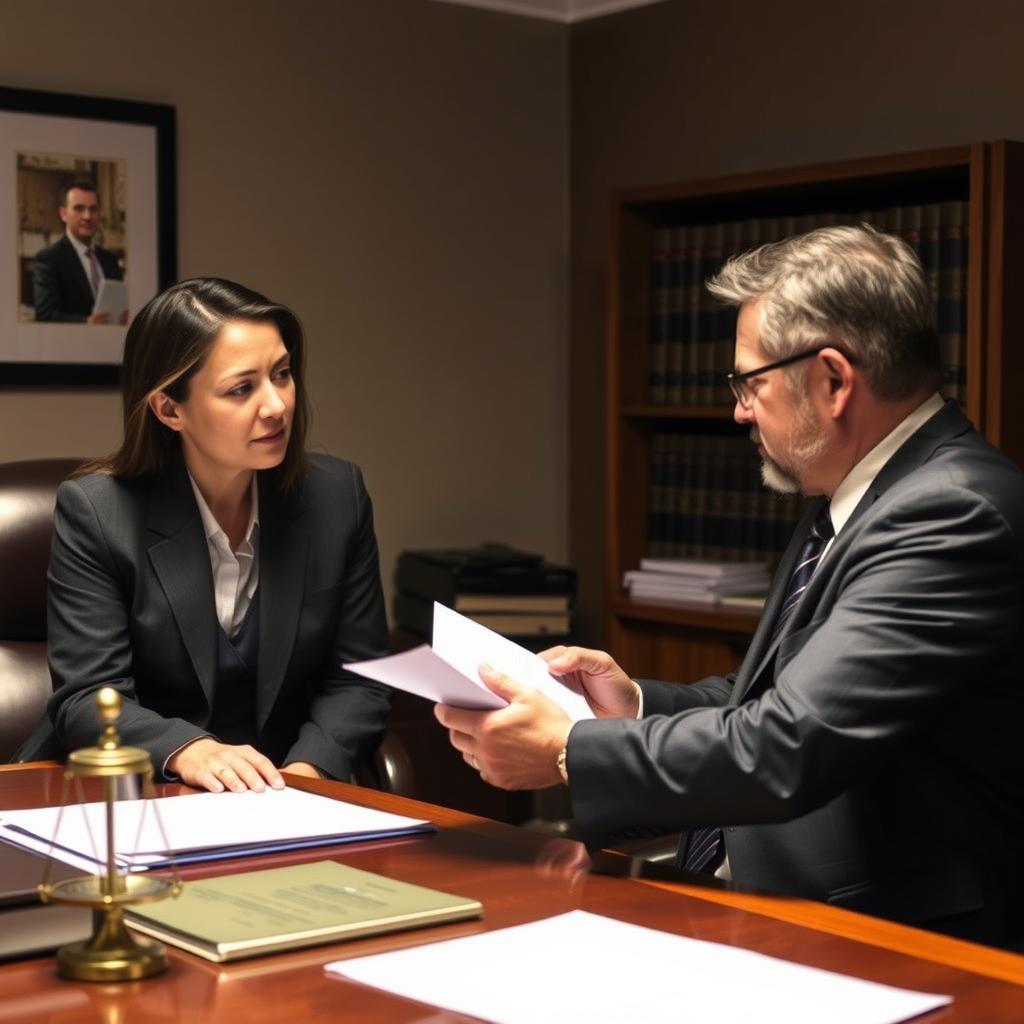
Postnuptial Agreement Lawyer Saratoga County, NY
Married couples in Saratoga County sometimes choose to clarify their financial rights and responsibilities without ending the marriage. A postnuptial agreement—a contract signed after the wedding—can define how property, assets, and support obligations will be handled if the couple later separates or divorces. For families in Ballston Spa, Saratoga Springs, Clifton Park, Malta, Halfmoon, Mechanicville, Wilton, Stillwater, and across the Capital District, Mr. Sris and his Of Counsel team at Law Offices Of SRIS, P.C. provide experienced representation in drafting, negotiating, and enforcing postnuptial agreements. The firm’s New York location serves clients at Saratoga County Supreme Court, where matrimonial matters are heard. Reach Law Offices Of SRIS, P.C. at (888) 437-7747 to discuss how a postnuptial agreement may fit your circumstances. Law Offices Of SRIS, P.C. – Advocacy Without Borders.
Understanding Postnuptial Agreements in Saratoga County, New York
A postnuptial agreement is a written contract between spouses that sets out how assets, debts, income, and spousal maintenance will be divided if the marriage ends. Unlike a prenuptial agreement, which is signed before the wedding, a postnuptial agreement is entered into after the couple is already married. Couples may pursue a postnuptial agreement for many reasons—changed financial circumstances, inheritance planning, business ownership, or a desire to reduce conflict surrounding property division. In New York, postnuptial agreements are recognized under the Domestic Relations Law, and their enforceability depends on whether the agreement meets standards of procedural fairness and full financial disclosure.
Saratoga County Supreme Court, located at 30 McMaster Street in Ballston Spa, has jurisdiction over matrimonial actions including divorce and equitable distribution. When a postnuptial agreement is challenged during a divorce proceeding, the Saratoga County Supreme Court evaluates whether the agreement was entered into voluntarily, whether both spouses had adequate knowledge of the other’s finances, and whether the terms are not unconscionable at the time of enforcement. Because New York is an equitable distribution state, a valid postnuptial agreement can override the default statutory rules for dividing marital property, making it a powerful tool for spouses who prefer certainty over litigation. Mr. Sris and his Of Counsel appear regularly in Saratoga County courts and understand how local practice can affect the presentation of a postnuptial agreement.
How Mr. Sris and His Of Counsel Handle Postnuptial Agreement Cases
The process typically begins with a consultation to understand what each spouse hopes to accomplish. Mr. Sris and his Of Counsel gather detailed financial information—assets, liabilities, income, retirement accounts, business interests—and identify areas where the couple’s goals align or diverge. The next step is negotiation. While each spouse should have independent legal counsel, Law Offices Of SRIS, P.C. can represent one party and work toward terms that are clear, enforceable, and tailored to the family’s situation.
Once the terms are agreed upon, the agreement is drafted in writing and must be signed by both parties with formal acknowledgment. Proper execution is important because a postnuptial agreement that appears procedurally flawed may be challenged later. Mr. Sris and his Of Counsel also handle enforcement proceedings if one spouse later refuses to abide by the agreement. Throughout the matter, the firm maintains a practical approach: the goal is an agreement that holds up in court should it ever be tested. Contact Law Offices Of SRIS, P.C. at (888) 437-7747 for a consultation about your postnuptial agreement needs in Saratoga County.
About Mr. Sris and His Of Counsel Team
Mr. Sris, Owner and Founder of Law Offices Of SRIS, P.C., has been practicing since 1997. A former prosecutor, he is admitted to practice in Virginia, Maryland, the District of Columbia, New Jersey, and New York. His multi-state experience gives him a broad perspective on how marital agreements are treated across different legal systems. Mr. Sris testified before the Virginia House Courts of Justice Committee in support of 2019 HB 635 (chief patron Del. David Bulova).
Alongside his Of Counsel, Mr. Sris draws on over 120 years of combined legal experience. Results may vary. The firm has documented 4,739+ case results across all practice areas since 1997. For postnuptial agreement matters in Saratoga County, the team brings practical knowledge of New York matrimonial practice and a focus on durable, well-crafted agreements.
Frequently Asked Questions About Postnuptial Agreements
What is a postnuptial agreement?
A postnuptial agreement is a legally binding contract between spouses, signed after marriage, that governs how property, assets, debts, and spousal support will be handled if the marriage ends. It serves a similar function to a prenuptial agreement but is executed during the marriage. Postnuptial agreements can address almost any financial matter, provided the terms do not violate public policy. New York courts generally enforce them when the agreement is made voluntarily and after full financial disclosure by both spouses.
Why would a married couple in Saratoga County consider a postnuptial agreement?
Couples seek postnuptial agreements for many reasons, such as receiving an inheritance, starting or selling a business, or experiencing a significant change in income. A postnuptial agreement can protect separate property, define how a family business will be valued, or provide clarity during a period of marital difficulty without immediately pursuing divorce. For couples in Saratoga County, having a clear written agreement that reflects New York’s equitable distribution framework can reduce uncertainty and potential litigation.
Are postnuptial agreements legally enforceable in New York?
Yes, postnuptial agreements are generally enforceable in New York as long as they meet certain legal requirements. The agreement must be in writing, signed by both spouses, and accompanied by a full and fair disclosure of each spouse’s financial circumstances. A court may refuse to enforce a postnuptial agreement if it finds that one party was coerced, that the agreement is unconscionable, or that material assets were hidden. Saratoga County Supreme Court applies these legal standards when a postnuptial agreement is challenged in a divorce proceeding. To discuss the details of your matter, contact Law Offices Of SRIS, P.C. at (888) 437-7747.
What are the requirements for a valid postnuptial agreement in New York?
A valid postnuptial agreement must be in writing, signed by both spouses, and made with full and fair disclosure of each party’s assets and liabilities. Each spouse should have a meaningful opportunity to review the agreement, and independent legal representation for each party is strongly recommended—though not technically required. The agreement cannot be the product of fraud, duress, or overreaching. New York courts also consider whether the terms are so one-sided as to be unconscionable at the time of enforcement.
Can a postnuptial agreement address child custody or child support?
A postnuptial agreement may state the spouses’ intentions regarding child custody and support, but the court will always decide those matters based on the best interests of the child at the time of the divorce. Any provision that attempts to bind the court on custody or to set child support below the statutory guidelines is unlikely to be enforced as written. However, the agreement can still provide a starting point for negotiation and demonstrate the parties’ expectations. India is not a signatory to the 1980 Hague Convention on Civil Aspects of International Child Abduction.
What happens if one spouse does not fully disclose assets?
If a spouse fails to disclose material assets or debts, a court may set aside the entire postnuptial agreement or void specific provisions. Full financial transparency is essential. New York law requires each party to provide a complete picture of their finances, and a knowing failure to do so can render the agreement unenforceable. For this reason, Mr. Sris and his Of Counsel emphasize thorough asset identification and documentation during the drafting process.
How does a postnuptial agreement differ from a separation agreement or a divorce settlement?
A postnuptial agreement is signed while the marriage is intact and anticipates a possible future divorce, whereas a separation agreement is made when spouses have already decided to live apart and, in many cases, are moving toward dissolution. A divorce settlement, by contrast, is filed as part of an active divorce action. Postnuptial agreements often address the same financial issues—property division and spousal maintenance—but they are executed under different circumstances and at a different stage of the marital relationship.
Do I need a lawyer to draft a postnuptial agreement?
You are not legally required to hire a lawyer to draft a postnuptial agreement, but working with an experienced attorney helps ensure the agreement complies with New York law and reduces the risk of later being declared unenforceable. An attorney can identify issues that a layperson might overlook, such as retirement account treatment, business valuation, or the interrelation with estate planning documents. For guidance on your specific situation, reach Law Offices Of SRIS, P.C. at (888) 437-7747.
How much does it cost to get a postnuptial agreement?
The cost of a postnuptial agreement varies depending on the complexity of the couple’s finances and the amount of negotiation required. A relatively straightforward agreement for a couple with modest assets and no business interests will involve less attorney time than an agreement that must address multiple real estate holdings, partnership interests, or significant debts. Fees are typically based on the time spent preparing, reviewing, and finalizing the document. Contact the firm for a consultation to discuss the expected scope of work.
How long does it take to negotiate and finalize a postnuptial agreement?
The timeline for completing a postnuptial agreement depends on the complexity of the marital estate and the cooperativeness of the parties. If both spouses are in general agreement about how to divide assets and are prompt in providing financial documents, the process can move forward relatively quickly. When significant disagreements exist or when one party requires time to review the proposal with independent counsel, the timeline extends. Mr. Sris and his Of Counsel work to move the matter forward efficiently while addressing all material terms.
Attorney advertising. Prior results do not guarantee a similar outcome.
Case results depend on a variety of factors unique to each case.
Results may vary.