
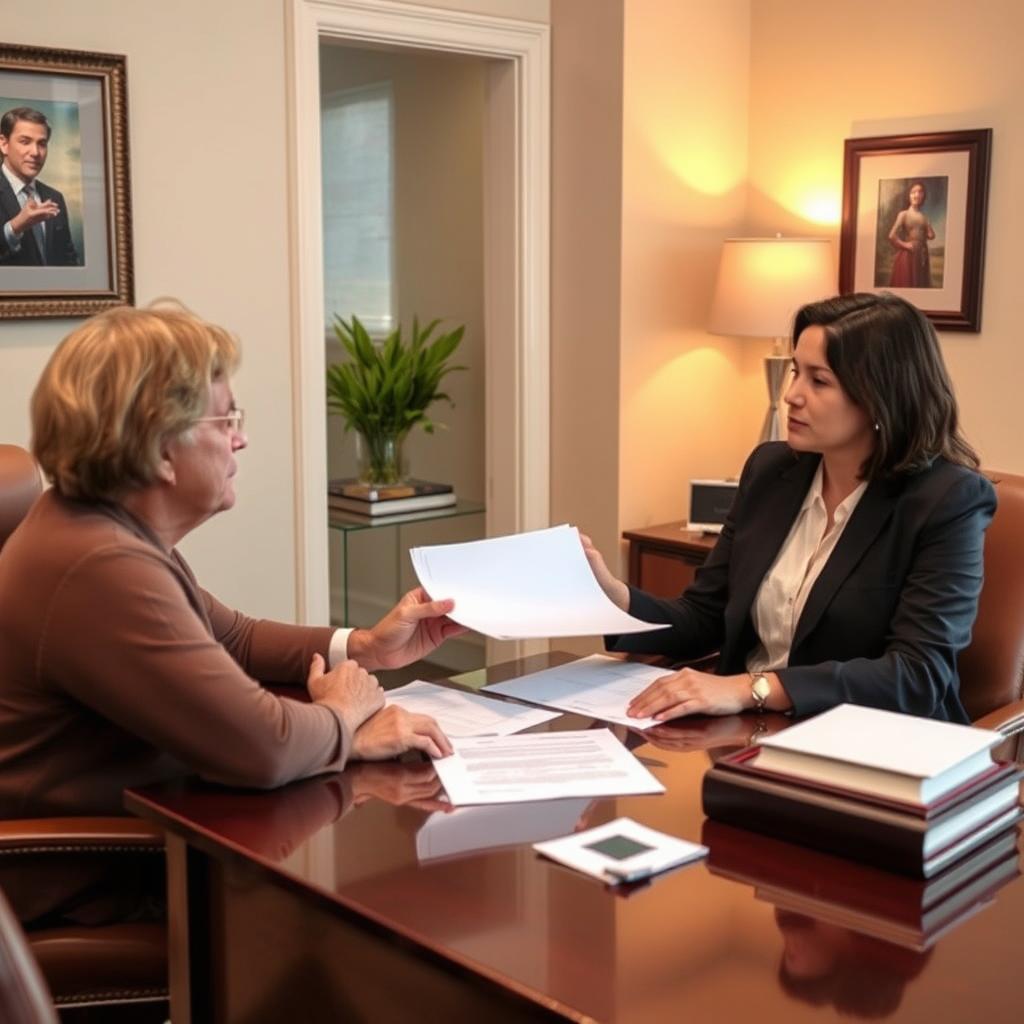
Postnuptial Agreement Lawyer Livingston County, NY
A postnuptial agreement is a contract spouses enter into after marriage to settle financial rights and obligations in the event of divorce or death. Under New York law, these agreements are governed by Domestic Relations Law § 236(B)(3) and general contract principles, and they are enforceable when entered into fairly and without duress. In Livingston County, families throughout the Finger Lakes region—from Geneseo and Dansville to Mount Morris and Avon—turn to Law Offices Of SRIS, P.C. for experienced counsel on marital contracts. Founded in 1997, the firm is led by Mr. Sris, a former prosecutor and Owner and Founder, who draws on extensive background in family law and contract negotiation. When properly drafted, a postnuptial agreement can resolve property division, spousal maintenance, and other financial issues without litigation. If a dispute arises, the agreement is typically interpreted by the New York Supreme Court in Livingston County, located at 2 Court Street in Geneseo. Our attorneys appear in that court and work to protect our clients’ interests. To speak with a postnuptial agreement lawyer serving Livingston County, call (888) 437-7747 and request a consultation. Law Offices Of SRIS, P.C. – Advocacy Without Borders.
What Postnuptial Agreements Mean in Livingston County, NY
In Livingston County, postnuptial agreements are handled primarily in the context of matrimonial law, and their enforcement or interpretation often takes place in the New York Supreme Court. The Supreme Court for the county sits in Geneseo and presides over divorce actions, equitable distribution, and contract disputes arising from marital agreements. When a marriage dissolves, a valid postnuptial agreement can supersede the default rules of equitable distribution, providing the court with a contractual framework for dividing assets and determining spousal support. Livingston County’s legal community—including the Family Court for custody and support matters—recognizes the importance of these agreements and generally respects the parties’ intent when the agreement meets statutory requirements.
The families we serve in Geneseo, Dansville, Mount Morris, Avon, Caledonia, Nunda, Lima, Livonia, Lakeville, and Conesus often seek postnuptial agreements after a significant change in circumstances: an inheritance, a change in business ownership, or a decision for one spouse to stay home with children. These agreements must be negotiated with full financial disclosure and without coercion. New York courts apply a “fair and reasonable” standard at the time of enforcement, and the absence of independent legal representation for each spouse can be a factor the court considers. Law Offices Of SRIS, P.C. Appears in Livingston County Supreme Court and guides clients through each step, from initial consultation to drafting and, if necessary, court enforcement.
How Mr. Sris and His Of Counsel Handle Postnuptial Agreement Cases
When a client contacts the firm about a postnuptial agreement, we begin by understanding the specific financial and personal circumstances that motivate the agreement. Postnuptial agreements often address the division of complex assets—such as business interests, retirement accounts, real estate, or professional practices—and require careful attention to both tax implications and the long-term needs of each spouse. Mr. Sris and his Of Counsel work with clients to develop a clear picture of marital and separate property, then draft provisions that meet the client’s goals while remaining defensible under New York law.
If the other spouse is represented by counsel, we negotiate the terms with that attorney. If a dispute arises—for example, a challenge to the agreement’s validity during a divorce—the firm is prepared to litigate in Livingston County Supreme Court. Our approach emphasizes thorough disclosure, clear language, and compliance with Domestic Relations Law requirements, which helps the agreement withstand judicial scrutiny. Throughout the process, we encourage open communication and work to resolve disagreements without trial, but we are fully prepared to advocate in court when necessary. Because every family’s situation is different, we tailor our strategy to the facts of the case and the client’s priorities.
About Mr. Sris and His Of Counsel Team
Law Offices Of SRIS, P.C. is led by Mr. Sris, Owner and Founder, who has practiced law since 1997. Before founding the firm, Mr. Sris served as a prosecutor, gaining insight into courtroom advocacy and legal strategy that he now applies in family law matters. He is admitted to practice in Virginia, Maryland, the District of Columbia, New Jersey, and New York, and he testified before the Virginia House Courts of Justice Committee in support of 2019 HB 635 (chief patron Del. David Bulova). Mr. Sris’s background in contract and family law, combined with his experience as a former prosecutor, gives him a practical perspective when handling postnuptial agreements and related disputes.
Mr. Sris is supported by a team of Of Counsel attorneys who bring additional depth in contract law, negotiation, and litigation. Together, Mr. Sris and his Of Counsel bring over 120 years of combined legal experience and 4,739+ documented firm-wide results. Results may vary. The firm is committed to providing thorough, responsive representation to clients in Livingston County and across New York. For matters involving postnuptial agreements, clients benefit from the team’s familiarity with the local courts and the procedural expectations of the 7th Judicial District.
Frequently Asked Questions
What is a postnuptial agreement in New York?
A postnuptial agreement is a written contract between spouses, signed after marriage, that sets out how financial matters will be resolved if the marriage ends. Under New York Domestic Relations Law § 236(B)(3), the agreement can address property division, maintenance, and other economic issues. For the agreement to be enforceable, it must be entered into voluntarily, with full financial disclosure, and its terms must be fair and reasonable both at the time of signing and at the time of enforcement. Postnuptial agreements allow couples to tailor their financial arrangements to their unique circumstances, avoiding the default rules of equitable distribution. To discuss whether a postnuptial agreement is right for you, contact Law Offices Of SRIS, P.C. at (888) 437-7747.
Do I need a lawyer to create a postnuptial agreement in Livingston County?
New York law does not require you to hire an attorney to create a postnuptial agreement, but having independent legal counsel greatly increases the likelihood that the agreement will be upheld. Courts look closely at whether each spouse had the opportunity to consult with a lawyer and understand the rights being waived. An experienced attorney can ensure full disclosure of assets and liabilities, draft clear and enforceable terms, and help you negotiate provisions that reflect your goals. Representing yourself may save money upfront, but an unenforceable agreement can cost far more in the long run. For legal guidance on postnuptial agreements in Livingston County, call (888) 437-7747.
Can a postnuptial agreement be challenged in New York court?
Yes, a postnuptial agreement can be challenged on grounds such as fraud, duress, overreaching, or a failure to provide fair and reasonable disclosure. A court may refuse to enforce part or all of the agreement if it finds that one spouse was pressured into signing, did not understand the terms, or was not given adequate financial information. The court may also set aside provisions that are unconscionable at the time of enforcement. To reduce the risk of a successful challenge, each party should be represented by separate counsel and the agreement should be entered into well before any divorce action is filed. To discuss the details of your matter, reach Law Offices Of SRIS, P.C. at (888) 437-7747.
How does a postnuptial agreement affect property division in a divorce?
A valid postnuptial agreement overrides New York’s equitable distribution statute and controls how property is divided upon divorce. Instead of a judge deciding what is marital versus separate property and how to divide assets, the spouses’ own agreement dictates the outcome. This can include detailed provisions about real estate, retirement accounts, business interests, and debt allocation. The agreement must still be fair at the time of enforcement, but courts generally respect the parties’ contractual choices when the agreement was properly made. To explore how a postnuptial agreement could shape your financial future, request a consultation at (888) 437-7747.
What should I bring to a consultation about a postnuptial agreement?
To prepare for a consultation, gather a list of your assets and debts, recent statements for bank and retirement accounts, deeds to real estate, and any existing estate planning documents. Also be ready to discuss your income, your spouse’s income, and the financial goals you hope the agreement will achieve. If either spouse owns a business, bring any relevant financial statements or valuation materials. Having this information available allows the attorney to assess your situation efficiently and offer informed guidance. For a consultation with a postnuptial agreement lawyer serving Livingston County, contact Law Offices Of SRIS, P.C. at (888) 437-7747.
Also serving nearby areas: Family law representation in New York County (Manhattan) · Family law services in Kings County (Brooklyn) · Family law help in Nassau County (Long Island).
Additional resources: New York Domestic Relations Law · Livingston County Supreme Court.
Attorney advertising. Prior results do not guarantee a similar outcome. Case results depend on a variety of factors unique to each case. Results may vary.