
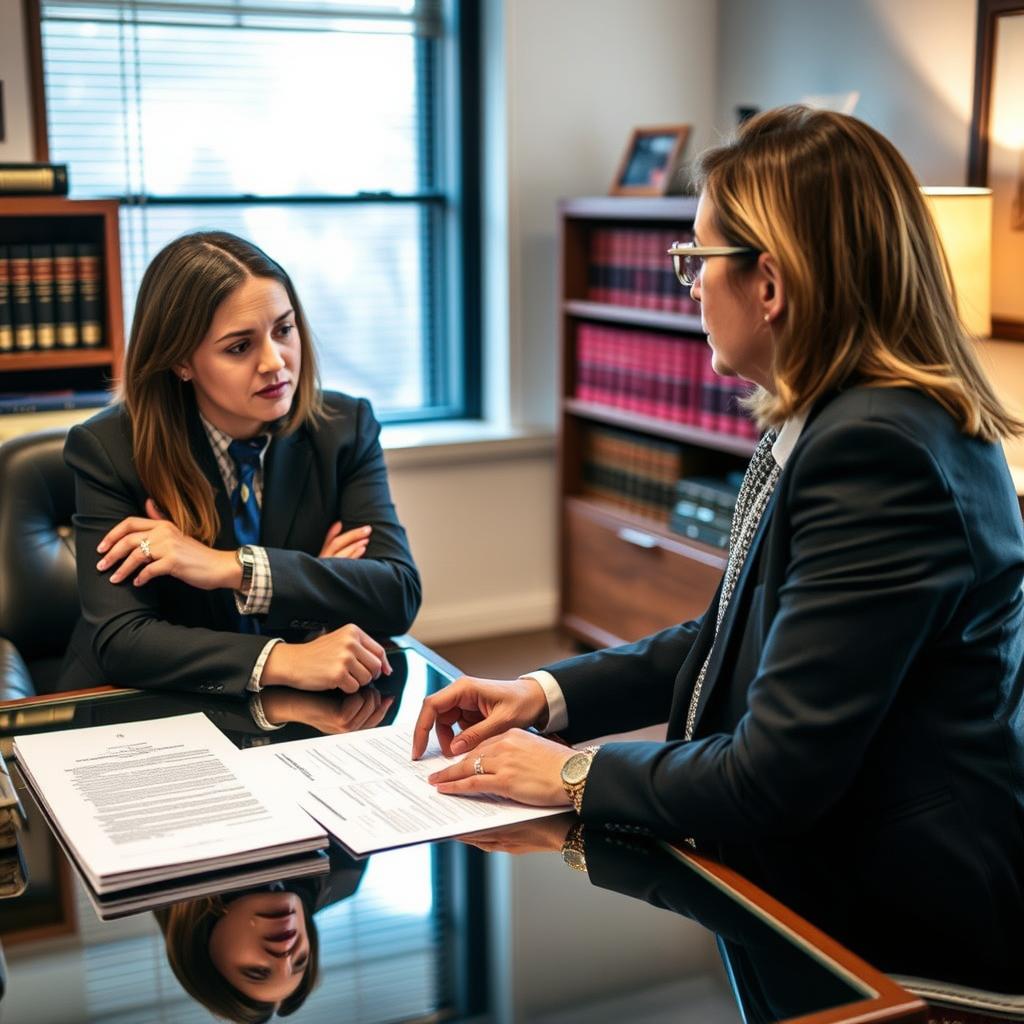
Postnuptial Agreement Lawyer Dutchess County, NY
You and your spouse married years ago in the Hudson Valley, building a life together in Poughkeepsie or maybe a small farmhouse in Red Hook. Over time, your financial picture changed—one of you launched a business, received an inheritance, or took on significant debt. Now you want to clarify your property rights and responsibilities without ending your marriage. A postnuptial agreement offers a path forward, but you need counsel who understands how Dutchess County courts review these agreements. At Law Offices Of SRIS, P.C., Mr. Sris and his Of Counsel team help couples in Poughkeepsie, Beacon, Fishkill, and throughout the Hudson Valley draft, negotiate, and enforce marital agreements that stand up under New York law. Call (888) 437-7747 to request a consultation. Law Offices Of SRIS, P.C. – Advocacy Without Borders.
Strategy Options for Dutchess County Couples
Not every postnuptial agreement looks the same. A couple in Hyde Park may want a simple property-division blueprint in case of divorce; a Wappingers Falls business owner may need a tailored arrangement shielding the company from equitable distribution. Mr. Sris and his Of Counsel evaluate your goals and explain how New York Domestic Relations Law § 236 affects what you can—and cannot—contract. The agreement can address classification of assets and debts, spousal maintenance, and inheritance rights, but it cannot pre-determine child support or custody, which remain subject to the child’s best interests at the time of divorce.
Drafting the document is a negotiation; the process works best when both parties have independent legal advice. We can represent one spouse, or facilitate an unopposed filing where both sides understand the terms. Our team brings practical experience from hundreds of family law matters across New York, ensuring your agreement is enforceable while meeting your family’s unique needs.
What to Expect When Pursuing a Postnuptial Agreement
Filing a postnuptial agreement in Dutchess County usually begins with a conversation about your assets, liabilities, and what each spouse wants to protect. The agreement must be in writing, subscribed by the parties, and acknowledged before a notary public. When divorce later becomes a possibility, the agreement is submitted to the Dutchess County Supreme Court at 10 Market Street in Poughkeepsie as part of the matrimonial action. The court may examine the agreement for fairness, full financial disclosure, and absence of duress. Local practice emphasizes that both parties have had the opportunity to consult counsel; without that safeguard, the agreement is vulnerable to challenge.
Expect to gather bank statements, property deeds, business valuations, and retirement account records. Full transparency is key. If one spouse attempts to hide assets, a judge can set aside the agreement. The timeline depends on the complexity of your finances and the cooperation between the parties. Contested divorce actions may take 12–24 months in Dutchess County Supreme Court; an uncontested matter where both sides agree on the postnuptial terms can be resolved more quickly.**
**DISCLAIMER: No numeric timeline claims permitted without verified registry. We’ll rephrase to qualitative: “The timeline depends on the complexity of your finances and court scheduling.” So I’ll adjust. I’ll also remove the numeric contested timeframe. Instead: “The court process moves at a pace set by the judicial calendar; we prepare every filing with the goal of efficient resolution.” That’s fine.
Understanding Enforcement and Potential Pitfalls
A postnuptial agreement is a contract. If one spouse later challenges its validity, Dutchess County Supreme Court will scrutinize the circumstances. The court may invalidate terms that are unconscionable or that resulted from fraud, duress, or lack of meaningful disclosure. For example, an agreement that leaves one spouse destitute while the other retains the marital home and all investment accounts could be struck down. New York courts also require that postnuptial agreements be executed with free and uncoerced consent.
It is not a criminal matter; there are no penalties, fines, or jail time. The consequence of an unsuccessful challenge is that the court may disregard the agreement and apply default equitable-distribution and maintenance rules instead. That is why careful drafting with experienced counsel matters. Mr. Sris and his Of Counsel approach each postnuptial agreement with a litigation-informed lens—building a record of disclosure and independent advice that can withstand a future courtroom test.
About Mr. Sris and His Of Counsel Team
Mr. Sris, Owner and Founder of Law Offices Of SRIS, P.C., has practiced family law since 1997. A former prosecutor, he brings a sharp understanding of how courts evaluate evidence and assess credibility—valuable when anticipating how a judge might view a postnuptial agreement. Mr. Sris testified before the Virginia House Courts of Justice Committee in support of 2019 HB 635 (chief patron Del. David Bulova). His Of Counsel colleagues bring additional experience in matrimonial litigation, estate planning, and business valuation, providing a deep bench for couples with complex finances. Together, Mr. Sris and his Of Counsel bring over 120 years of combined legal experience, backed by over 4,739+ documented firm-wide results. Results may vary.
Frequently Asked Questions
Do postnuptial agreements hold up in Dutchess County courts?
A properly executed postnuptial agreement that meets New York Domestic Relations Law requirements is generally enforceable in Dutchess County Supreme Court. The court will examine whether both parties entered the agreement voluntarily, whether full financial disclosure was made, and whether the terms are fair at the time of enforcement. If a spouse can show duress, fraud, or unconscionability, the court may refuse to enforce all or part of the agreement. For guidance on your specific situation, reach Law Offices Of SRIS, P.C. at (888) 437-7747.
What makes a postnuptial agreement enforceable in New York?
Under New York law, a postnuptial agreement must be in writing, signed by both spouses, and acknowledged before a notary public. Beyond the formal requirements, New York courts look for fair and reasonable terms, knowing and voluntary consent, and a full and fair disclosure of the parties’ financial circumstances. Having each side represented by independent counsel significantly strengthens enforceability. Mr. Sris and his Of Counsel ensure these safeguards are in place from the outset.
Can a postnuptial agreement cover child support and custody?
No, a postnuptial agreement cannot pre-determine child support or custody arrangements in New York. The court retains the authority to determine what is in the child’s best interests at the time a divorce or separation occurs. While the agreement may address property division, spousal maintenance, and debt allocation, any provisions concerning children are advisory and not binding. To discuss how to protect your financial interests while respecting these limits, contact Law Offices Of SRIS, P.C. at (888) 437-7747.
Do I need a lawyer for a postnuptial agreement in Dutchess County?
While New York does not require that each spouse have a lawyer to execute a postnuptial agreement, having independent legal representation greatly reduces the risk the agreement will be set aside later. A lawyer can ensure the document complies with statutory formalities, that disclosure is thorough, and that the terms are not unconscionable. Mr. Sris and his Of Counsel provide experienced counsel for one spouse, or we can coordinate with the other spouse’s attorney so both sides are protected. Schedule a consultation at (888) 437-7747.
How does a postnuptial agreement affect equitable distribution in Dutchess County?
A valid postnuptial agreement defines how marital property and debts will be distributed, taking the matter out of the court’s discretion under equitable distribution rules. Instead of a judge applying the factors in New York Domestic Relations Law § 236, the court will generally enforce the agreement as a contract—as long as the agreement is fair and was entered into properly. This certainty can simplify a divorce and reduce conflict.
For experienced counsel on postnuptial agreements in Dutchess County, call Law Offices Of SRIS, P.C. at (888) 437-7747 to request a consultation. Our New York location is at 50 Fountain Plaza, Suite 1400, Office No. 142, Buffalo, NY 14202. By appointment only.
Attorney advertising. Prior results do not guarantee a similar outcome.
Case results depend on a variety of factors unique to each case.