
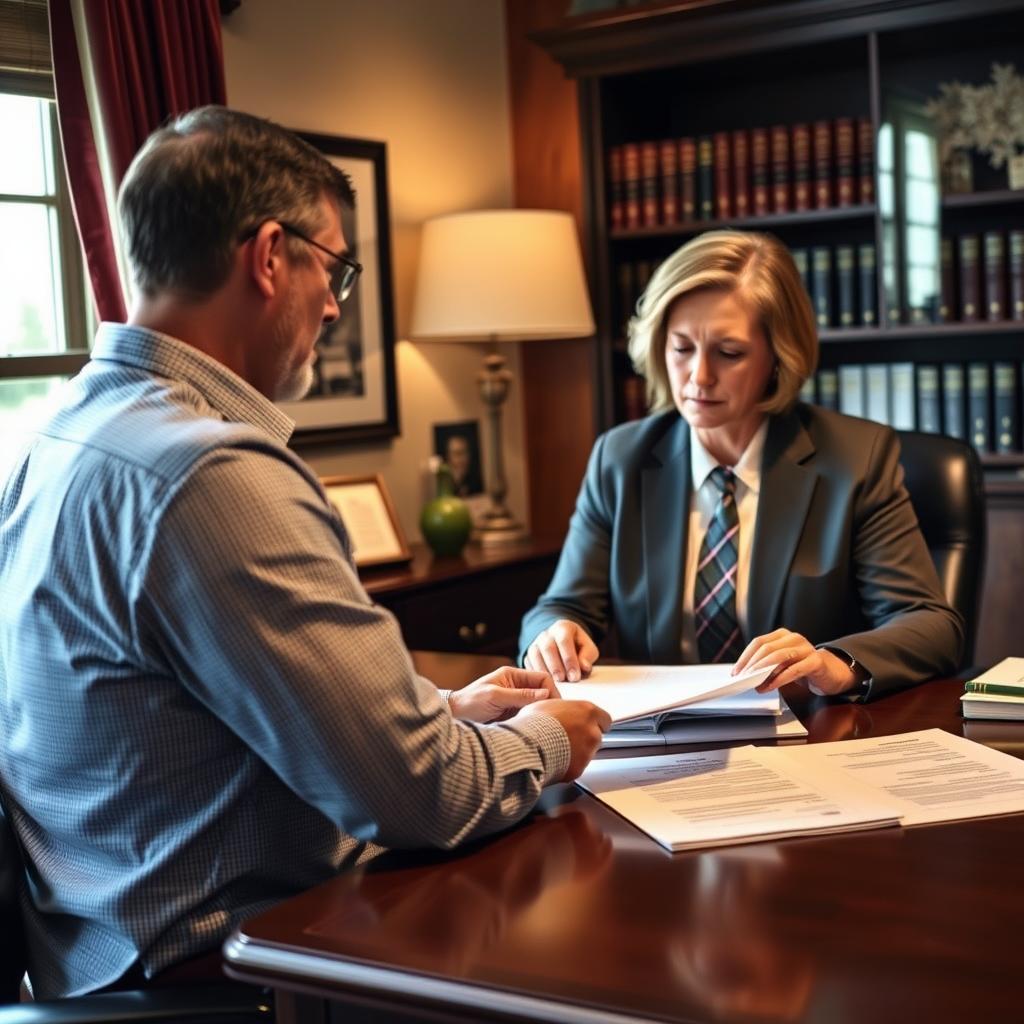
Postnup Lawyer Rappahannock County, VA
You and your spouse bought land in Sperryville years ago and built a home overlooking the Blue Ridge foothills. Since then, you’ve grown a small construction business, saved for retirement, and raised two children. Now, years into your marriage, a friend’s divorce has you asking a hard question: if something happens to us, are our assets truly protected? You don’t want to end the marriage — but you do want clarity about what each of you would keep if the marriage ended. That’s where a postnuptial agreement comes in. A postnuptial agreement allows married couples in Rappahannock County, Virginia, to define their property rights and financial obligations without waiting for a separation or divorce. At Law Offices Of SRIS, P.C., Mr. Sris and his Of Counsel guide couples through drafting enforceable postnuptial agreements that reflect their real lives and shared history. Reach our firm at (888) 437-7747 to schedule a confidential consultation. Law Offices Of SRIS, P.C. – Advocacy Without Borders.
What Postnuptial Agreements Mean in Rappahannock County
In Virginia, a postnuptial agreement is a written contract signed by spouses after they are married. Under Virginia’s Premarital Agreement Act — Va. Code § 20-147 et seq. — a postnuptial agreement can address property division, spousal support, rights upon death, and other financial matters. The same statutes that govern premarital agreements apply to postnuptial agreements, although courts scrutinize postnuptial agreements more closely because the parties are already married and owe each other heightened fiduciary duties.
For Rappahannock County residents, local court considerations matter. The Rappahannock County Circuit Court at 250 Gay Street, Suite 1, Washington, VA 22747, has jurisdiction over equitable distribution matters and enforcement of marital agreements. Rappahannock County Juvenile and Domestic Relations District Court handles custody, visitation, and support — but the postnuptial agreement itself, if challenged, would be litigated in Circuit Court. The Twentieth Judicial District, which includes Rappahannock, Fauquier, and Loudoun Counties, applies Virginia’s equitable distribution framework. Knowing the local bench, the court’s procedural expectations, and how a judge might view a particular agreement helps Mr. Sris and his Of Counsel draft agreements that are more likely to withstand challenge.
How Mr. Sris and His Of Counsel Handle Postnuptial Agreement Cases
Mr. Sris and his Of Counsel begin each postnuptial-agreement matter with a detailed consultation to understand the couple’s goals, their assets, and any concerns one spouse may have. They review financial records, business holdings, retirement accounts, and real estate located in or outside Virginia. Because a postnuptial agreement must be entered into voluntarily, with full and fair disclosure — or a knowing waiver of disclosure — counsel makes sure each spouse understands the agreement’s terms and the rights being modified or waived.
The team handles drafting, negotiation, and review of the agreement. If one spouse is represented by separate counsel, coordination is essential; in uncontested situations, the firm can prepare the agreement for both parties provided there is a clear written acknowledgment of the potential conflict. After signing, the agreement is maintained as a binding contract. Should the postnuptial agreement be challenged later — for example, during a contested divorce in Rappahannock County Circuit Court — Mr. Sris and his Of Counsel are prepared to defend its enforceability. Throughout, the team focuses on practical outcomes: preserving the family’s financial stability, protecting a business that one spouse built during the marriage, or clarifying inheritance rights for children from a prior relationship.
About Mr. Sris and His Of Counsel Team
Mr. Sris, Owner and Founder of Law Offices Of SRIS, P.C., has been practicing law since 1997. A former prosecutor, he founded the firm to provide multi-state representation in family law, criminal defense, and related matters. Mr. Sris testified before the Virginia House Courts of Justice Committee in support of 2019 HB 635 (chief patron Del. David Bulova). He is admitted in Virginia, Maryland, the District of Columbia, New Jersey, and New York. His Of Counsel bring over 120 years of combined legal experience with 4,739+ documented firm-wide results and handle cases collaboratively, drawing on backgrounds that include prior service as a state trooper, a CPS contract attorney, and a former Maryland Assistant State’s Attorney. Results may vary.
The firm has served over 10,000 clients and received more than 100 client reviews. Mr. Sris and his Of Counsel appear regularly in Rappahannock County courts and understand the local procedural landscape. When you work with the firm, you benefit from a team that combines broad legal knowledge with practical experience inside the Twentieth Judicial District.
Frequently Asked Questions
What is a postnuptial agreement in Virginia?
A postnuptial agreement is a contract signed by spouses after marriage that defines property rights, spousal support, and other financial obligations in the event of divorce or death. In Virginia, these agreements are governed by the Premarital Agreement Act, Va. Code § 20-147 et seq. Courts evaluate enforceability based on whether the agreement was entered voluntarily, with full financial disclosure or a knowing waiver, and whether its terms are substantively fair. A postnuptial agreement does not govern child custody or child support, as those issues are determined by the court based on the best interests of the child at the time of the proceeding.
Do I need a lawyer to create a postnuptial agreement in Rappahannock County?
While you are not legally required to hire a lawyer, working with an attorney helps ensure the agreement is enforceable and reflects Virginia law. A postnuptial agreement that is poorly drafted, signed under duress, or based on incomplete financial disclosures is vulnerable to being set aside. Mr. Sris and his Of Counsel can help both spouses understand their rights, prepare a clear document, and avoid the pitfalls that lead courts to invalidate these agreements. For more complex estates — particularly those involving a business, rental properties, or retirement accounts — professional legal guidance is especially important.
Can a postnuptial agreement be challenged in court?
Yes, a spouse may challenge a postnuptial agreement in Rappahannock County Circuit Court if they believe it was signed involuntarily, based on fraud, or is unconscionable. Because spouses owe each other a fiduciary duty during marriage, courts examine postnuptial agreements more closely than prenuptial agreements. Common grounds for challenge include lack of independent legal advice, hidden assets, and terms that are so one-sided they shock the conscience. An attorney can structure the agreement to withstand these challenges by documenting the voluntary nature of the signing, ensuring full disclosure, and building in safeguards.
What makes a postnuptial agreement invalid in Virginia?
A postnuptial agreement may be invalidated if it was not entered voluntarily, one spouse failed to provide a fair and reasonable disclosure of assets and obligations, or the agreement is so unfair that enforcement would be unconscionable. Virginia courts also consider whether each spouse had the opportunity to consult with independent counsel. A waiver of the right to disclosure is permissible only if it is knowing and voluntary. Additionally, any provision that purports to waive child support or custody rights is unenforceable; those issues are always determined at the time of the proceeding based on the child’s best interests.
How is a postnuptial agreement different from a prenuptial agreement?
The primary difference is timing: a prenuptial agreement is signed before marriage, while a postnuptial agreement is signed after the couple is already married. Both are governed by the same Virginia statute and can address property division, spousal support, and death benefits. However, because postnuptial agreements are executed during marriage — when one spouse may already hold significant leverage — they face stricter scrutiny in court. The couple’s existing marital property and any commingled assets become part of the analysis, making a clear inventory and transparent negotiation essential.
How does a postnuptial agreement affect property division in Rappahannock County?
A valid postnuptial agreement controls property division between the spouses, overriding Virginia’s default equitable distribution rules. In the absence of an agreement, Rappahannock County Circuit Court would divide marital property based on the eleven factors in Va. Code § 20-107.3. With a properly executed agreement, the couple defines in advance what is separate and what is marital — and how assets will be allocated. This can be especially valuable for families with a family-owned business, inherited land, or property acquired prior to marriage but improved with marital funds.
Family Law Lawyer Fairfax County ·
Family Law Lawyer Fairfax City ·
Family Law Lawyer Falls Church ·
Family Law Lawyer Prince William County ·
Family Law Lawyer Manassas
Attorney advertising. Prior results do not guarantee a similar outcome. Case results depend on a variety of factors unique to each case. Attorney responsible for this advertising: Mr. Sris. Results may vary.