
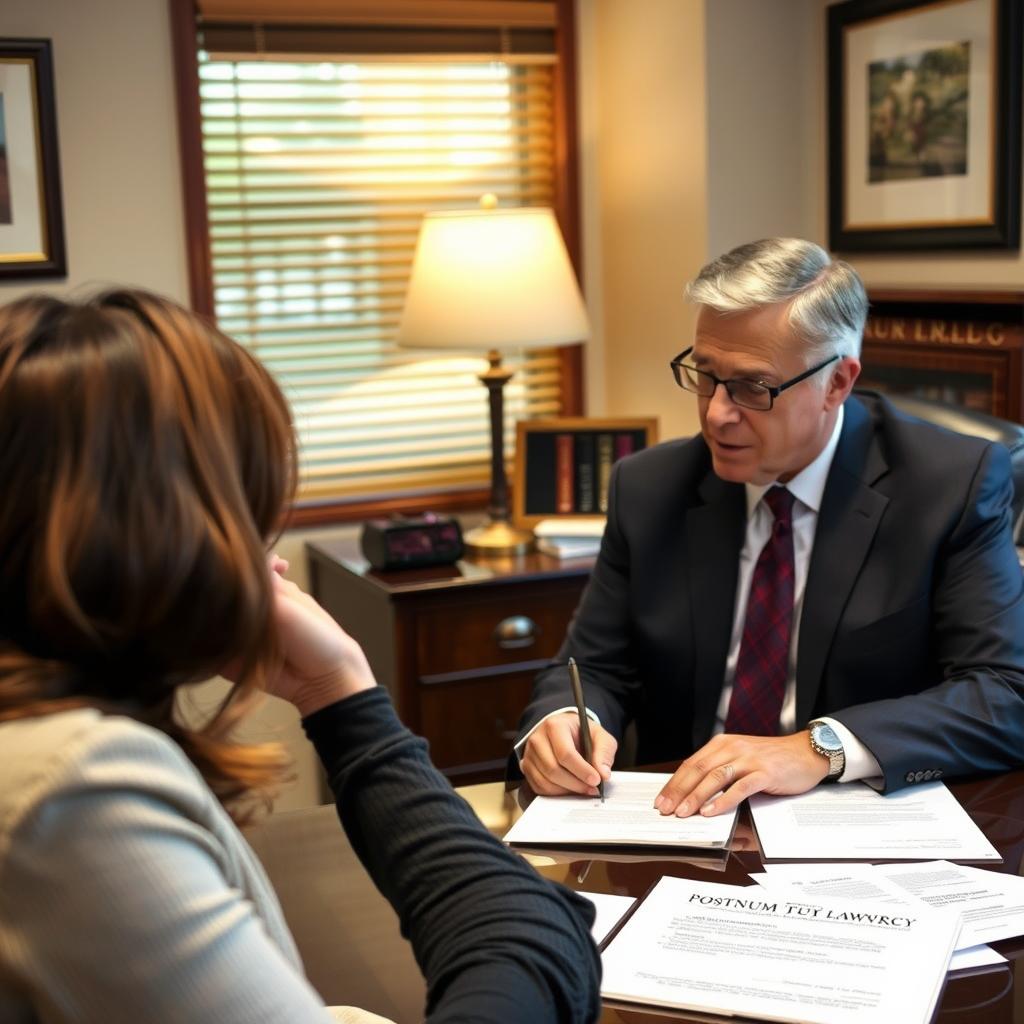
Postnup Lawyer Clarke County, VA
You and your spouse have built a life together in Clarke County — perhaps in Berryville or Boyce — and you want to establish clear financial understandings that protect both of you and your children. A postnuptial agreement can provide that clarity, defining how property, debts, and support would be handled if you ever separate or divorce. At Law Offices Of SRIS, P.C., we help Clarke County residents draft enforceable postnuptial agreements under Virginia law. Call (888) 437‑7747 to schedule a consultation. Law Offices Of SRIS, P.C. – Advocacy Without Borders.
Your Options for a Postnuptial Agreement in Virginia
Virginia law allows married couples to enter into postnuptial agreements — written contracts that determine the division of assets, debts, and spousal support in the event of separation or divorce. Governed by the Premarital Agreement Act (Va. Code § 20‑147 et seq.), these agreements can be tailored to your family’s specific financial picture. Whether you need to protect a business interest, clarify the division of retirement accounts, or establish support obligations, a well‑drafted postnuptial agreement provides predictability and reduces future conflict.
In Clarke County, Mr. Sris and his Of Counsel work with couples to identify their goals and draft agreements that comply with Virginia law. The statute requires full financial disclosure and that each party enters the agreement voluntarily. When both spouses have independent legal counsel, the agreement is more likely to withstand later court scrutiny. Our team can guide you through the drafting process, ensuring your agreement addresses your unique priorities and is structured for enforceability.
What to Expect When Drafting a Postnuptial Agreement
Creating a postnuptial agreement starts with an initial consultation, where we discuss your financial situation, your goals, and any existing estate planning documents. We then gather detailed information about assets, debts, income, and potential future inheritances. Full disclosure is critical; the agreement may be set aside if a court finds that one spouse concealed significant assets.
Once the financial landscape is clear, we draft the agreement. The other spouse should have the document reviewed by his or her own attorney — this independent legal review strengthens enforceability. After both parties are satisfied, the agreement is signed and notarized. While the agreement is a contract, its terms may become relevant in a future divorce or separation proceeding in Clarke County Circuit Court. The court will examine whether the agreement was entered into voluntarily, without duress, and with full and fair disclosure.
Legal Considerations for Postnuptial Agreements in Virginia
Virginia courts will enforce a postnuptial agreement if it meets certain criteria. Under Va. Code § 20‑151, an agreement is enforceable unless the party seeking to set it aside proves that it was not executed voluntarily, or that it was unconscionable when made and there was not adequate disclosure of assets. Because these determinations are fact‑intensive, careful drafting and a documented process of mutual disclosure are essential.
The agreement may address property classification, division of marital and separate property, spousal support, and attorney fees. It cannot determine child custody or child support, as those remain subject to the court’s primary jurisdiction. A postnuptial agreement entered into shortly before a divorce filing may invite heightened scrutiny. Our attorneys counsel Clarke County couples on how to create durable agreements that reflect mutual fairness and comply with Virginia law.
For a deeper statutory breakdown, visit our family law overview on our main site.
About Mr. Sris and His Of Counsel Team
Mr. Sris, Owner and Founder of Law Offices Of SRIS, P.C., has practiced family law in Virginia since 1997. He is a former prosecutor whose experience in trial advocacy and statutory construction informs the way he approaches postnuptial agreements. Mr. Sris testified before the Virginia House Courts of Justice Committee in support of 2019 HB 635 (chief patron Del. David Bulova), a bill that refined equitable distribution procedures. He is admitted to practice in Virginia, Maryland, the District of Columbia, New Jersey, and New York.
Mr. Sris and his Of Counsel bring over 120 years of combined legal experience to family law matters, with 4,739+ documented firm-wide results. Results may vary. The team assists clients throughout Clarke County and the surrounding Shenandoah region, drawing on decades of experience with Virginia domestic relations law.
Frequently Asked Questions About Postnuptial Agreements in Clarke County
What is a postnuptial agreement in Virginia?
A postnuptial agreement is a written contract between spouses that defines how assets, debts, and spousal support will be handled if the marriage ends or one spouse dies. Under Virginia’s Premarital Agreement Act (Va. Code § 20‑147 et seq.), postnuptial agreements can address property division, business interests, inheritance rights, and more, so long as they are entered into voluntarily and with full financial disclosure. Virginia courts treat these agreements as binding contracts, provided they are not unconscionable. For couples in Clarke County, a well‑drafted postnuptial agreement can prevent costly disputes and provide financial clarity.
Do I need a lawyer to draft a postnuptial agreement in Clarke County?
You are not legally required to hire an attorney, but having independent legal counsel for each spouse significantly increases the likelihood that the agreement will be enforced. Virginia law closely examines whether both parties entered into the agreement voluntarily and with a full understanding of their rights. An experienced family law attorney can identify hidden assets, negotiate terms that protect your interests, and draft provisions that comply with the Premarital Agreement Act. In Clarke County, Mr. Sris and his Of Counsel can represent you in drafting and reviewing a postnuptial agreement.
What can a postnuptial agreement cover?
A postnuptial agreement can specify how marital and separate property, including real estate, investments, retirement accounts, and business interests, will be divided in a divorce or upon death. It may also address spousal support obligations, the division of debts, and the disposition of certain personal property. Virginia’s statute allows broad freedom of contract, as long as the terms do not violate public policy. The agreement cannot predetermine child custody or child support, as those decisions remain under the court’s authority and must serve the child’s best interests.
Can a postnuptial agreement determine spousal support?
Yes, a postnuptial agreement can set spousal support terms, including the amount, duration, or even a waiver of support, provided the agreement is fair and voluntary. Virginia courts will enforce spousal support provisions unless the agreement is unconscionable or the result of fraud or duress. To maximize enforceability, both spouses should fully disclose their financial circumstances and have the opportunity to consult with separate attorneys. In Clarke County, we help couples negotiate reasonable support terms that reflect their financial realities and long‑term goals.
How does a Virginia court enforce a postnuptial agreement?
If a postnuptial agreement is challenged during a divorce, the Clarke County Circuit Court will determine whether the agreement is enforceable under Va. Code § 20‑151. The court will consider whether the agreement was signed voluntarily, whether both parties made full and fair financial disclosure, and whether the agreement is unconscionable. The spouse seeking to set aside the agreement bears the burden of proving its invalidity. A well‑drafted agreement that demonstrates a transparent negotiation process and separate legal review is more likely to be upheld.
What makes a postnuptial agreement unenforceable?
An agreement may be set aside if a court finds it was not executed voluntarily, or if it was unconscionable at the time of signing and lacked adequate financial disclosure. Common pitfalls include one spouse hiding assets, using coercion or duress, or presenting the agreement on the eve of a divorce filing. Virginia law also requires that the agreement be in writing and signed by both parties. Our attorneys work to ensure that your postnuptial agreement is built on a foundation of openness and mutual consent, minimizing the risk of future challenges.
Is a postnuptial agreement the same as a separation agreement?
No, a postnuptial agreement is executed during the marriage and addresses financial rights upon future divorce or death, while a separation agreement is typically signed after the parties have separated and in contemplation of immediate divorce. Both are contracts, but separation agreements often resolve all pending divorce issues and are incorporated into a final divorce decree. A postnuptial agreement serves as a pre‑emptive plan, providing certainty before any marital discord arises. In Clarke County, we can assist with both types of agreements depending on your situation.
How long does it take to create a postnuptial agreement?
The timeline varies based on the complexity of your assets and the level of agreement between you and your spouse. A straightforward agreement for a couple with limited assets might be completed in a few weeks, while a more complex agreement involving business valuations or significant separate property may take several months. The key is to allow sufficient time for full financial disclosure, negotiation, and independent legal review. In Clarke County, we work efficiently to help you achieve a well‑drafted agreement without unnecessary delay.
Can we modify an existing postnuptial agreement?
Yes, postnuptial agreements can be amended or revoked by a subsequent written agreement signed by both spouses. An amendment must satisfy the same formalities as the original agreement — it must be in writing, signed voluntarily, and supported by updated financial disclosure. If your financial circumstances have changed significantly, or if you wish to alter spousal support terms, our lawyers can draft an amendment that aligns with your current goals while preserving the enforceability of the original agreement.
How do I start the process of getting a postnuptial agreement in Berryville?
The first step is to contact Law Offices Of SRIS, P.C. at (888) 437‑7747 to schedule a confidential consultation. During that meeting, we will discuss your objectives, explain the legal requirements under Virginia law, and begin gathering the financial information necessary to draft a thorough agreement. Our Ashburn Location serves Clarke County by appointment, and we are available to meet with you and your spouse to create a postnuptial agreement that brings clarity and peace of mind to your financial future.
Explore family law representation in nearby Virginia counties: Shenandoah County family law attorneys, Frederick County family law lawyers, Warren County family law representation, Rockingham County family law services, Augusta County family law practice.
Virginia Code Title 20 (Domestic Relations) · Virginia Courts
To speak with a lawyer about a postnuptial agreement in Clarke County, reach Law Offices Of SRIS, P.C. at (888) 437‑7747. Our Ashburn Location is at 20130 Lakeview Center Plaza, Room 403, Ashburn, VA 20147, and serves clients from Berryville, Boyce, and throughout the area by appointment. Call (571) 279‑0110 to reach the Ashburn Location directly.
Attorney advertising. Prior results do not guarantee a similar outcome.
Case results depend on a variety of factors unique to each case.