
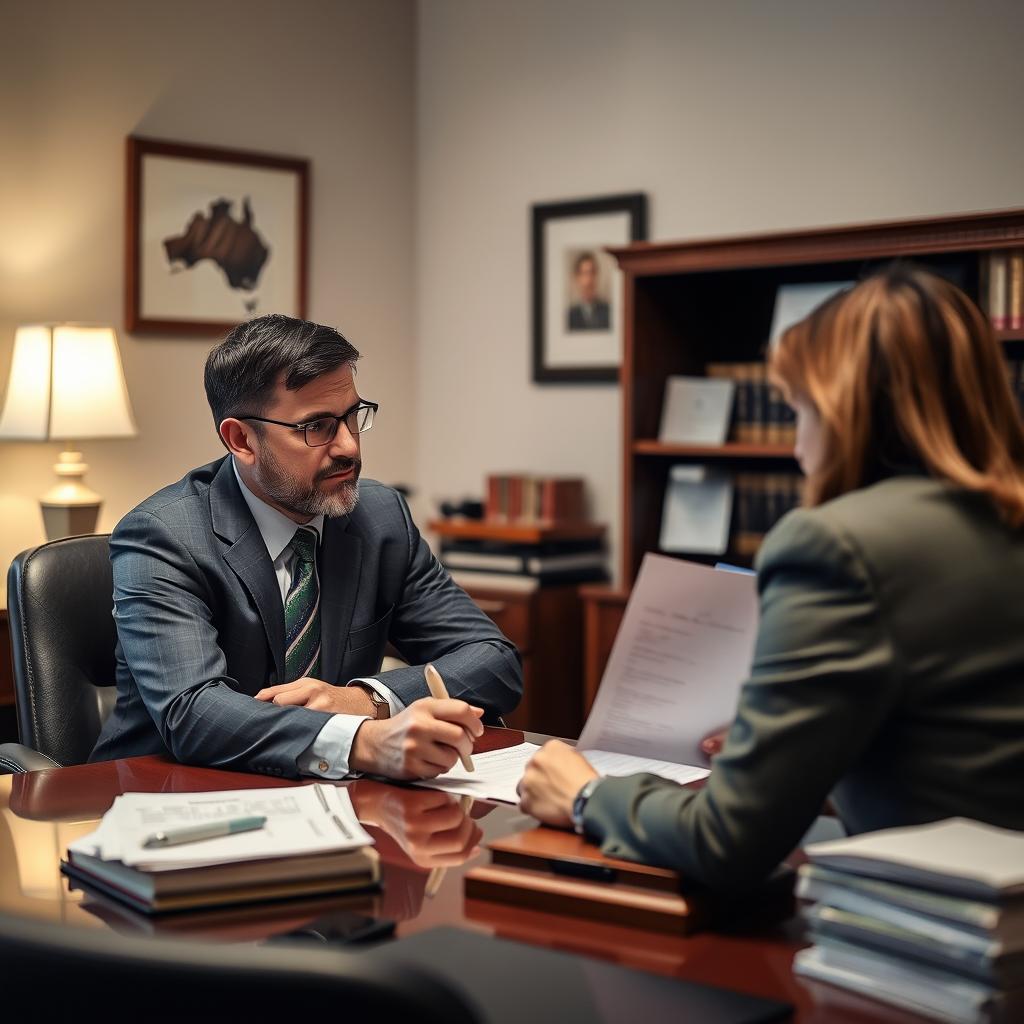
Do I need a lawyer for an uncontested divorce in Chemung County
You are not legally required to hire a lawyer to file for an uncontested divorce in Chemung County, New York. A spouse may complete and submit the necessary forms on their own. That said, choosing to proceed without legal guidance can create risks in a process that directly impacts property division, spousal maintenance, and parenting arrangements. Missing a required document or misunderstanding how New York law applies to your specific situation can delay the judgment or lead to an agreement that does not fully protect your interests. Mr. Sris and his Of Counsel at Law Offices Of SRIS, P.C. help individuals assess whether their divorce qualifies as uncontested, draft a separation agreement that accurately reflects the parties’ intentions, and navigate the filing requirements of the Chemung County Supreme Court. For a consultation about an uncontested divorce, reach the firm at (888) 437-7747. Law Offices Of SRIS, P.C. – Advocacy Without Borders.
Direct answer: you may file alone, but risk is real
An uncontested divorce in New York is one in which both spouses agree on all issues—grounds for divorce, property division, spousal maintenance, and any matters related to children. The paperwork flows through the New York Supreme Court, which for Chemung County residents sits in Elmira. Because New York’s Domestic Relations Law requires an irretrievable breakdown of the marriage for at least six months, or a separation agreement that resolves all economic and parenting issues, the documents the court receives must meet specific legal standards. A self-represented spouse who overlooks a statutory requirement may face a rejected filing, months of delay, or a final decree that leaves unaddressed the very issues they believed were settled.
When a lawyer reviews the situation, the attorney can identify whether the divorce is genuinely uncontested under New York law, draft a separation agreement that courts will enforce, and verify that service of process comports with procedural rules. Mr. Sris and his Of Counsel bring extensive combined legal experience to the task, helping clients spot hidden disagreements—such as a pension valuation difference or a parenting-time dispute—that could convert an apparently uncontested case into a contested one. For legal guidance about your Chemung County matter, contact Law Offices Of SRIS, P.C. at (888) 437-7747.
Frequently Asked Questions
What qualifies as an uncontested divorce in New York?
An uncontested divorce means both spouses agree on all issues, including grounds, property division, spousal maintenance, and child-related matters, and one spouse files a summons and complaint while the other does not contest. In New York, the no-fault ground requires the marriage to be irretrievably broken for at least six months. Alternatively, parties may submit a separation agreement that resolves all issues and live apart pursuant to it. When complete agreement exists, the case can proceed without trial, often shortening the overall timeline. Even in an uncontested matter, the court must find that the agreement is fair and that procedural requirements—such as service of process and residency—are satisfied before entering a judgment of divorce.
Do I have to hire a lawyer for an uncontested divorce in Chemung County?
No, New York law does not require you to hire a lawyer; you may represent yourself, but legal guidance helps ensure your agreement is complete and enforceable. The Chemung County Supreme Court accepts pro se filings, and the state provides online resources and form packets. However, a spouse who drafts an agreement without an attorney may inadvertently waive rights to retirement assets, future spousal maintenance, or business interests. Mr. Sris and his Of Counsel review the terms of your proposed agreement and confirm it complies with New York’s equitable distribution framework. Self-representation is possible, but an attorney’s review often prevents costly mistakes that surface years later.
What are the residency requirements for divorce in Chemung County?
At least one spouse must meet New York’s residency requirement, which generally means living in the state continuously for a specified period before filing; the exact duration varies depending on the ground asserted and where the marriage occurred. For a no-fault divorce based on irretrievable breakdown, the residency period is typically two years. Other grounds may have shorter or longer periods. The court also requires that the action be brought in a county where either spouse resides. Mr. Sris and his Of Counsel evaluate which ground best fits your situation and confirm that the residency prerequisite is met before any paperwork is submitted to the Chemung County Supreme Court.
How does property get divided in an uncontested divorce?
New York follows equitable distribution: marital property is divided fairly, though not necessarily equally, based on a list of statutory factors. In an uncontested divorce the spouses decide how to divide assets and debts themselves, and the court reviews the agreement for fairness. The parties classify property as marital (acquired during the marriage) or separate (owned before the marriage or received as a gift or inheritance). A well-drafted separation agreement addresses real estate, bank accounts, retirement plans, business interests, and debts. Mr. Sris and his Of Counsel help clients structure a distribution that a judge is likely to approve, avoiding a scenario where the court rejects the agreement and sends the parties back to negotiation.
What documents are needed for an uncontested divorce?
The core documents include a summons, a verified complaint, an affidavit of service, a sworn statement of net worth, and a judgment of divorce, along with any separation agreement the parties have signed. Additional forms are required when children are involved, such as a child support worksheet and a parenting plan. Chemung County uses the statewide forms available through the New York Courts website. A spouse who files pro se must ensure each document is correctly completed, notarized, and served on the other spouse in a manner the court accepts. Missing a required form can cause the clerk to reject the filing, restarting the process. An attorney manages the paperwork and confirms that every required submission reaches the court.
Can I get an uncontested divorce if my spouse will not cooperate?
Not as a true uncontested divorce; if one spouse refuses to sign, the matter becomes contested and may proceed on a no-fault ground after the statutory waiting period. New York allows a spouse to seek a divorce on the ground of irretrievable breakdown even when the other spouse does not consent, but the case will not follow the streamlined uncontested track. Issues such as property division, maintenance, and custody would then be litigated if the spouses cannot agree. Mr. Sris and his Of Counsel can assess whether a contested action is necessary and, where possible, negotiate a settlement that ultimately results in an uncontested filing.
How long will an uncontested divorce take in Chemung County?
The timeline depends on court scheduling and the completeness of the submitted documents; an uncontested divorce generally moves faster than a contested one, but no fixed period can be past results do not guarantee a similar outcome. Once all forms are properly filed and served, and any mandated waiting periods have elapsed, the court may schedule a brief hearing to confirm the agreement. Delays often arise from incomplete paperwork or from the judge’s calendar. An attorney can help present a complete package that minimizes administrative delays, but the final timing remains within the court’s discretion.
Do both spouses need to appear in court?
In many uncontested divorces, only the filing spouse needs to appear briefly before the judge; the other spouse may not be required to attend. New York procedure sometimes permits a divorce to be granted on submission of documents alone, but local practice in Chemung County may call for a short allocution hearing at which the plaintiff answers a few questions under oath. Mr. Sris and his Of Counsel prepare the client for what to expect at that hearing and confirm whether personal appearance of the defendant is necessary based on the court’s current procedure.
How does child support work in an uncontested divorce?
Child support in New York is calculated using statutory guidelines based on parental income, and in an uncontested divorce the spouses may agree to an amount that deviates from the guideline if they provide a valid reason that the court accepts. The agreement must address basic support, health insurance, and childcare expenses. The court reviews the arrangement to ensure it serves the child’s best interests. Mr. Sris and his Of Counsel help clients structure a support provision that accurately reflects the parents’ finances and that a judge is willing to incorporate into the judgment.
What is the difference between a contested and an uncontested divorce?
An uncontested divorce means the spouses agree on all issues, while a contested divorce involves unresolved disputes over grounds, property, support, or custody. Contested matters require motion practice, discovery, settlement conferences, and possibly trial, significantly extending the timeline and cost. Uncontested cases, by contrast, can often be resolved more efficiently because the parties present a unified agreement for the court’s approval. If questions exist about whether a case is truly uncontested, an attorney can identify points of disagreement early and work to resolve them before the filing becomes adversarial.
What should I bring to a consultation about my uncontested divorce?
Bring a list of all assets and debts, recent tax returns, pay stubs, any existing separation agreement, and information about your children if relevant. Even if the divorce is amicable, the attorney needs a complete financial picture to evaluate whether the proposed property division is equitable under New York law. Information about retirement accounts, real estate, business interests, and inheritances all factor into the analysis. The more complete the materials, the more productive the consultation. To schedule an appointment, call (888) 437-7747.
Are there alternatives to going to court for a divorce?
Mediation and collaborative law are alternatives that can help spouses reach an agreement outside of court, but the final divorce judgment must still be filed with the court. In mediation, a neutral third party facilitates negotiations. In collaborative divorce, each spouse retains a lawyer and all parties sign an agreement to resolve issues without litigation. If an agreement is reached through either method, the resulting uncontested divorce filing can proceed in Chemung County Supreme Court. Mr. Sris and his Of Counsel can discuss whether these alternatives suit your circumstances during a consultation at (888) 437-7747.
About Mr. Sris and His Of Counsel Team
Mr. Sris, Owner and Founder of Law Offices Of SRIS, P.C., is a former prosecutor who has practiced since 1997. He is admitted in Virginia, Maryland, the District of Columbia, New Jersey, and New York. Mr. Sris testified before the Virginia House Courts of Justice Committee in support of 2019 HB 635 (chief patron Del. David Bulova). He and his Of Counsel bring extensive combined legal experience to family law matters, including uncontested divorce proceedings in Chemung County. The firm’s New York location serves clients throughout the Southern Tier and the entire state by appointment. For a consultation, reach Mr. Sris and his Of Counsel at (888) 437-7747.
Explore related family law resources for other New York counties:
- New York County (Manhattan) family law matters
- Kings County (Brooklyn) family law matters
- Queens County (Queens) family law matters
- Richmond County (Staten Island) family law matters
- Nassau County (Long Island) family law matters
New York official resources:
Attorney advertising. Prior results do not guarantee a similar outcome.
Case results depend on a variety of factors unique to each case.
Results may vary.