
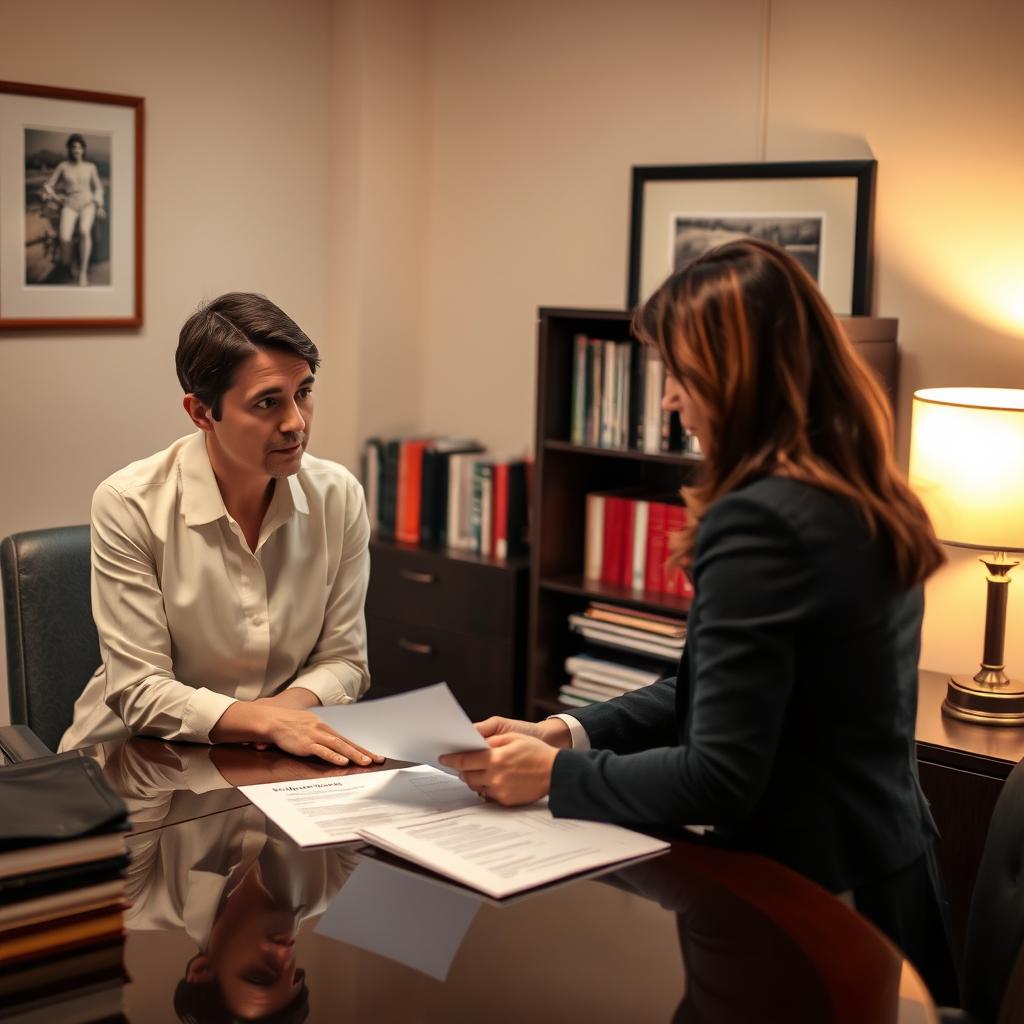
Desertion Divorce Lawyer Shenandoah
You need a Desertion Divorce Lawyer Shenandoah to prove your spouse abandoned you for a year or more. Law Offices Of SRIS, P.C. —Advocacy Without Borders. Virginia law requires clear proof of intent to end the marriage and cohabitation. The Shenandoah County Circuit Court handles these filings. SRIS, P.C. has a Location serving Shenandoah to manage your case. (Confirmed by SRIS, P.C.)
Statutory Definition of Desertion in Virginia
Desertion is a fault-based ground for divorce under Virginia Code § 20-91(6). The statute requires one spouse to leave the other without justification for one year or more. The departing spouse must intend to end the marital cohabitation permanently. This is not a simple separation. The act must be willful and without the consent of the other spouse. The one-year period is a strict statutory requirement. The clock starts the day the deserting spouse leaves the marital home. Temporary absences for work or travel do not count as desertion. The deserted spouse cannot have provoked the departure through their own misconduct. The burden of proof rests entirely on the spouse filing for divorce. You must demonstrate the intent to desert and the continuous one-year period. Virginia courts interpret this ground narrowly. A skilled Virginia family law attorney is critical for this process.
Virginia Code § 20-91(6) defines desertion as a fault-based ground for divorce with a one-year continuous separation requirement.
What constitutes “willful desertion” under Virginia law?
Willful desertion requires a deliberate intent to end cohabitation. The leaving spouse must decide to abandon the marriage. This decision must be voluntary and without coercion. The act is not an impulsive reaction to an argument. It is a settled purpose to live apart permanently. The deserting spouse must also have the physical and mental capacity to leave. Proof often comes from letters, emails, or witness testimony. The deserted spouse cannot have agreed to the separation. Consent transforms the situation into a no-fault separation. Shenandoah County judges look for clear evidence of this intent.
How does constructive desertion differ from actual desertion?
Constructive desertion occurs when one spouse makes cohabitation intolerable. The offending spouse’s behavior forces the other to leave the home. This can include cruelty, neglect, or refusal of marital relations. The spouse who is forced out is considered the “innocent” party. They can then file for divorce on grounds of desertion. The one-year separation period still applies from the date of departure. Proving constructive desertion is often more complex than actual desertion. You must show the behavior was so severe it justified leaving. Shenandoah courts require specific instances of misconduct.
Can a brief reconciliation attempt reset the one-year clock?
A bona fide reconciliation attempt can reset the statutory clock. The spouses must resume cohabitation with the intent to reconcile. Simply living together for convenience does not count. The reconciliation must be a genuine effort to save the marriage. If it fails, the desertion period starts anew from the subsequent separation. Even a short period of cohabitation can interrupt the continuous year. This is a common pitfall in desertion divorce cases. Documentation of the reconciliation’s terms is essential. A Desertion Divorce Lawyer Shenandoah can advise on protecting your timeline.
The Insider Procedural Edge in Shenandoah County
Your desertion divorce case is filed at the Shenandoah County Circuit Court. The address is 112 South Main Street, Woodstock, VA 22664. This court has specific local rules and filing procedures. You must file a Complaint for Divorce stating desertion as the ground. The complaint must detail the date and circumstances of the abandonment. A filing fee is required to initiate the case. Procedural specifics for Shenandoah are reviewed during a Consultation by appointment at our Shenandoah Location. The court clerk can provide forms but not legal advice. After filing, the defendant must be properly served with the complaint. Service can be challenging if the deserting spouse’s location is unknown. The court may allow service by publication in a local newspaper. This requires a motion and court order. The timeline from filing to final hearing varies. Local judges expect precise adherence to procedural rules.
What is the filing fee for a divorce complaint in Shenandoah?
The current filing fee for a divorce complaint is set by Virginia law. The exact amount is subject to change by the state legislature. You must confirm the fee with the Shenandoah County Circuit Court clerk. Payment is typically required at the time of filing. Fees are generally non-refundable once the case is docketed. Additional costs for service of process will apply. If you cannot afford the fee, you may file a petition to proceed in forma pauperis. This requires detailed financial disclosure to the court. A local attorney knows the exact current costs.
How long does a contested desertion divorce take?
A contested desertion divorce can take over a year to resolve. The complexity arises from proving fault. The defendant may challenge the allegations of abandonment. This leads to discovery, depositions, and evidentiary hearings. The court’s docket schedule in Shenandoah County also affects timing. Uncontested cases where the defendant does not respond are faster. A default judgment can be entered after proper service. Even an uncontested fault-based divorce requires a prima facie case. The judge must be satisfied the statutory grounds are met. Hiring a lawyer often simplifies this evidentiary process. Learn more about Virginia family law services.
Penalties & Defense Strategies in Desertion Cases
The most common penalty in a desertion divorce is the loss of certain marital rights. Virginia is an equitable distribution state. A finding of fault can influence the division of assets and alimony. The court may award a larger share of the marital estate to the innocent spouse. Desertion can also affect spousal support awards. The judge has discretion to consider marital misconduct. The table below outlines potential legal and financial consequences.
| Offense / Finding | Penalty / Consequence | Notes |
|---|---|---|
| Desertion (Fault Finding) | Can impact equitable distribution | Judge may award more assets to innocent spouse. |
| Desertion (Fault Finding) | Can affect spousal support award | Misconduct is a statutory factor for support. |
| Failure to Prove Desertion | Dismissal of divorce complaint | Case may be refiled under no-fault grounds after separation period. |
| Counterclaim for Constructive Desertion | Reversal of fault allegation | Defendant claims plaintiff’s behavior forced them out. |
[Insider Insight] Shenandoah County prosecutors in juvenile and domestic relations matters, and judges in circuit court, take marital fault seriously in ancillary matters like support. A documented pattern of abandonment can sway decisions on custody and support pendente lite. However, they require clear, objective evidence, not just allegations.
How does desertion affect child custody decisions?
Desertion alone does not automatically decide custody. The primary standard is the child’s best interests. However, a history of abandonment can be a relevant factor. A judge may question the deserting parent’s commitment and stability. The act of leaving the family home can be seen as detrimental. The court will examine the reasons for the departure. If the desertion harmed the child’s welfare, it carries more weight. Custody evaluations often explore these patterns of behavior. A parent’s willingness to maintain a relationship with the child is critical.
Can I get alimony if I was the one who left?
It is very difficult to get alimony if you were the deserting spouse. Virginia Code § 20-107.1 lists factors for spousal support. The “circumstances and factors which contributed to the dissolution” is a key factor. A finding of desertion against you is serious marital misconduct. This misconduct can bar or significantly reduce an alimony award. The court aims to avoid rewarding the party at fault. You would need compelling extenuating circumstances. Proving constructive desertion could change this analysis. You must show you were forced to leave due to the other spouse’s conduct.
Why Hire SRIS, P.C. for Your Shenandoah Desertion Divorce
Bryan Block, a former Virginia State Trooper, leads our family law practice. His investigative background is crucial for proving desertion cases. He knows how to gather and present evidence of intent and duration. SRIS, P.C. has extensive experience in Shenandoah County Circuit Court. We understand the local judges’ expectations for fault-based divorces. Our firm approach is direct and strategic. We build a clear timeline of the abandonment. We secure evidence like witness statements and communications. We anticipate and counter common defenses raised by the other side. Our goal is to establish your case efficiently. We protect your rights to marital assets and support. A desertion divorce requires precise legal work. Our team provides focused legal representation in family law matters.
Bryan Block, former Virginia State Trooper. He applies investigative discipline to family law cases. He focuses on evidence-based strategies for fault divorces. He practices in Shenandoah County and across Virginia.
Localized FAQs for Desertion Divorce in Shenandoah
What evidence do I need to prove desertion in Shenandoah County?
You need proof of the date your spouse left and their intent not to return. Evidence includes letters, emails, texts, witness testimony, and proof of separate residences. The evidence must cover the full one-year period. Learn more about criminal defense representation.
How long must my spouse be gone to file for desertion divorce?
Virginia law requires a continuous period of one year. The clock starts the day your spouse abandons the marital home. Brief reconciliations can reset this one-year timeline.
Can I file for divorce in Shenandoah if my spouse left and moved to another state?
Yes, if you meet Virginia’s residency requirements. You must have been a Virginia resident for six months before filing. The Shenandoah County Circuit Court has jurisdiction over the divorce proceeding.
What if my spouse claims I consented to the separation?
This is a common defense to desertion. Your lawyer must show you did not agree to the separation. Evidence of your objections to their departure is critical to defeat this claim.
Does desertion affect the division of our property in Virginia?
Yes, desertion is fault-based grounds. A judge can consider marital misconduct when dividing marital property under equitable distribution. It may result in a more favorable division for the innocent spouse.
Proximity, CTA & Disclaimer
Our Shenandoah Location is strategically positioned to serve clients throughout Shenandoah County. We are accessible from Woodstock, Strasburg, and New Market. For a case review with a Desertion Divorce Lawyer Shenandoah, contact us. Consultation by appointment. Call 888-437-7747. 24/7.
Law Offices Of SRIS, P.C.
—Advocacy Without Borders.
Serving Shenandoah, Virginia.
Past results do not predict future outcomes.