
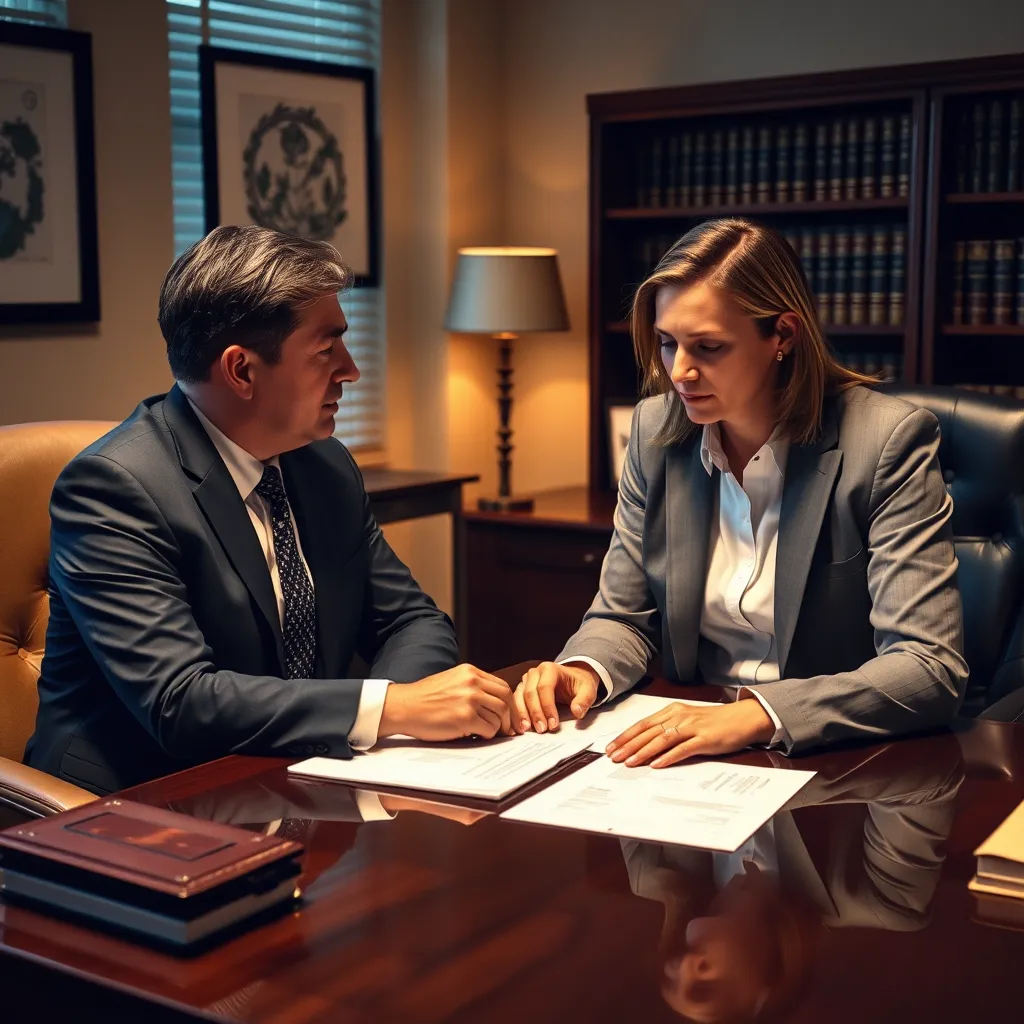
Marital Agreement Lawyer Fairfax, VA
If you are considering a prenuptial or postnuptial agreement in Fairfax, Virginia, you need counsel who understands how these agreements interact with Virginia’s equitable distribution and spousal-support laws. Law Offices Of SRIS, P.C., practicing since 1997, concentrates on family-law matters throughout the Commonwealth, including Fairfax County and the City of Fairfax. Mr. Sris and his Of Counsel team draft, negotiate, and, when necessary, litigate marital agreements that aim to withstand judicial scrutiny while protecting your financial interests. For a consultation about a marital agreement, reach our Fairfax location at (888) 437-7747. Law Offices Of SRIS, P.C. – Advocacy Without Borders.
Understanding Marital Agreements in Fairfax, Virginia
A marital agreement—whether entered into before marriage (prenuptial) or after marriage (postnuptial)—is a contract between spouses that defines property rights, spousal-support obligations, and the division of assets if the marriage ends. Virginia law governs these agreements under the Premarital Agreement Act (Va. Code § 20-147 et seq.) and the broader equitable-distribution framework set out in Va. Code § 20-107.3. In Fairfax County, the Circuit Court at 4110 Chain Bridge Road, Suite 210, Fairfax, VA 22030, is the court that addresses disputes over marital agreements during a divorce or separate-maintenance action.
Fairfax is part of the Nineteenth Judicial District, one of Virginia’s busiest court systems. Because the area has a high concentration of government employees, technology professionals, business owners, and military families, marital agreements here often involve complex assets: federal retirement accounts, stock options, real estate investments, and family-owned businesses. A properly crafted agreement can define what is marital and what is separate property, and can alter the default equitable-distribution factors that a Fairfax Circuit Court judge would otherwise apply.
Virginia is not a community-property state; instead, the court divides marital property equitably—meaning fairly, not necessarily equally. A marital agreement can override many default rules, but the document must be entered into voluntarily, with full financial disclosure, and its terms must not be unconscionable at the time of enforcement. Mr. Sris and his Of Counsel have experience in structuring agreements that reflect the specific needs of families throughout Fairfax, Burke, Centreville, Chantilly, Herndon, Reston, McLean, Vienna, Tysons, Oakton, Springfield, Annandale, and the Falls Church area.
How Mr. Sris and His Of Counsel Handle Marital Agreements
The process often begins with a consultation in which the attorneys learn about your financial situation, your goals, and any concerns you have about future disputes. Mr. Sris and his Of Counsel then work to draft an agreement that is tailored to your circumstances, using clear language and full schedules of assets and liabilities. When both parties are represented, the agreement is more likely to be viewed as fair and voluntary, reducing the risk of a later challenge.
Negotiation is a key part of the process. The team works collaboratively with your spouse’s counsel to resolve disagreements over property classification, spousal-support terms, and business-valuation issues. If a dispute arises about the validity or enforcement of an existing agreement during a divorce proceeding in Fairfax Circuit Court, Mr. Sris and his Of Counsel can litigate the matter, presenting evidence about the circumstances of the agreement’s signing and the parties’ understanding at that time.
Marital agreements in Virginia may also address the division of retirement assets, a topic that was the subject of the 2019 revision to Va. Code § 20-107.3(g). Mr. Sris testified before the Virginia House Courts of Justice Committee in support of 2019 HB 635 (chief patron Del. David Bulova). That legislative testimony reflects the firm’s familiarity with the statutory mechanics that can affect a marital agreement’s pension and retirement-account provisions.
About Mr. Sris and His Of Counsel Team
Mr. Sris is the Owner and Founder of Law Offices Of SRIS, P.C. A former prosecutor, he has concentrated his practice on family-law matters since founding the firm in 1997. He is admitted to practice in Virginia, Maryland, the District of Columbia, New Jersey, and New York. Mr. Sris keeps his personal caseload small so that he can remain deeply involved in each matter; every case is handled with the support of experienced Of Counsel attorneys with substantial family-law backgrounds.
Mr. Sris and his Of Counsel bring over 120 years of combined legal experience, supported by over 4,739 documented firm-wide results. Results may vary. The team’s combined experience includes drafting and litigating marital agreements in all five jurisdictions where the firm practices, with a particular focus on the Northern Virginia courts where the firm maintains its Fairfax location at 4008 Williamsburg Court, Fairfax, VA 22032. Consultations are available by appointment; call (888) 437-7747 to schedule.
Frequently Asked Questions
What is the difference between a prenuptial and a postnuptial agreement in Virginia?
A prenuptial agreement is signed before marriage, while a postnuptial agreement is signed after the couple is already married. Both are governed by the Virginia Premarital Agreement Act (Va. Code § 20-147 et seq.) and can address property division, spousal support, and other financial matters. The main practical difference is timing, but a postnuptial agreement may face closer scrutiny because spouses already owe each other fiduciary duties during marriage. Virginia courts examine both types of agreements for voluntariness, full disclosure, and overall fairness at the time of enforcement.
Can a marital agreement override Virginia’s equitable distribution rules?
Yes, a valid marital agreement can modify or waive many default equitable-distribution rules in Virginia. Under Va. Code § 20-107.3, a court divides marital property using 11 statutory factors, but a properly executed agreement can define what is marital and separate property, set a specific division formula, or eliminate certain claims entirely. Some terms, such as an advance waiver of child support, are not enforceable because they affect a child’s best interests. The agreement must be procedurally and substantively fair to be upheld.
What makes a marital agreement unenforceable in Fairfax Circuit Court?
A marital agreement may be set aside if it was signed involuntarily, if one party failed to disclose assets or debts, or if the agreement is unconscionable when enforcement is sought. Virginia courts also look at whether each party had the opportunity to consult independent counsel. Even if one party chose not to, the court will consider whether the agreement’s terms are so one-sided that they shock the conscience. Disputes over the validity of a marital agreement in Fairfax are heard in the Circuit Court; the specific facts of each case determine the outcome.
Do I need a lawyer to create a marital agreement in Virginia?
Virginia law does not require you to have an attorney to enter into a marital agreement, but having experienced counsel is strongly advisable. Both the drafting and negotiating stages involve significant legal questions about property classification, retirement accounts, business interests, and future support rights. An agreement that looks straightforward may contain language that later works against you. Mr. Sris and his Of Counsel can help ensure the agreement reflects your intentions and meets the statutory requirements for enforceability.
How does a marital agreement affect military pensions in Fairfax County?
Military retired pay is a major asset in many Fairfax-area divorces, and a marital agreement can specify how it will be treated. Virginia courts generally classify the marital share of military retired pay as marital property subject to equitable distribution, but a prenuptial or postnuptial agreement can define the division or waive a spouse’s interest. Federal law (the Uniformed Services Former Spouses’ Protection Act) still imposes certain requirements for direct payment from the Defense Finance and Accounting Service. An attorney can help ensure the agreement works with both state and federal rules.
For guidance on your specific situation, reach Law Offices Of SRIS, P.C. at (888) 437-7747.
Last reviewed: June 2026
Attorney advertising. Prior results do not guarantee a similar outcome. Results may vary. Case results depend on a variety of factors unique to each case.