
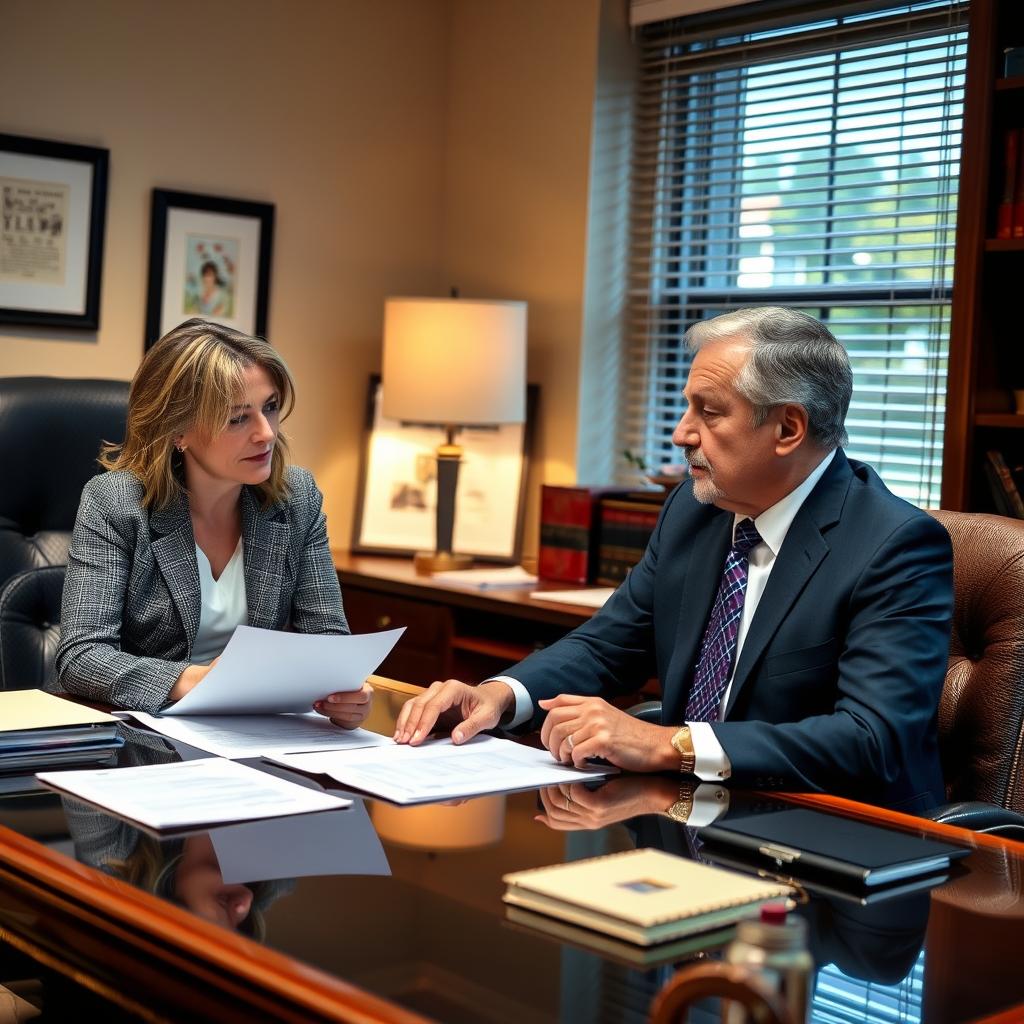
Do I need a lawyer for an uncontested divorce in Loudoun County
You are not legally required to hire a lawyer for an uncontested divorce in Virginia, but working with an experienced family law attorney helps you avoid procedural missteps, incomplete property settlements, and future enforcement disputes. An uncontested divorce means both spouses agree on all aspects of the separation — division of marital property, spousal support, and, if minor children are involved, custody and child support. Even when both parties are amicable, Virginia’s separation requirements under Va. Code § 20-91 and equitable distribution rules under Va. Code § 20-107.3 contain technical nuances that can create complications if your paperwork is not prepared correctly. Mr. Sris and his Of Counsel handle uncontested divorce matters in Loudoun County, helping clients navigate the Circuit Court and the required separation period. To discuss whether legal representation is right for your situation, reach Law Offices Of SRIS, P.C. at (888) 437-7747. Law Offices Of SRIS, P.C. – Advocacy Without Borders.
Uncontested divorce in Loudoun County — what the process involves
An uncontested divorce in Loudoun County begins when one spouse files a Complaint for divorce in the Loudoun County Circuit Court, located at 18 East Market Street, Leesburg. The Circuit Court has exclusive jurisdiction over divorce actions in Virginia. Separate custody, visitation, and child support matters may also be heard by the Loudoun County Juvenile and Domestic Relations District Court, but the divorce itself proceeds through the Circuit Court.
Virginia law provides two no-fault grounds for divorce based on separation. Under Va. Code § 20-91(9)(a), if the parties have lived separate and apart without cohabitation for one year, a divorce may be granted. Under Va. Code § 20-91(9)(b), the separation period is reduced to six months if the parties have no minor children and have entered into a written separation agreement resolving all property and support issues. Both parties must meet Virginia’s six-month residency requirement under Va. Code § 20-97 before the Complaint can be filed. The process is designed to be streamlined when the divorce is uncontested, but the paperwork still demands careful attention to statutory requirements, including proper service of the Complaint on the defendant spouse and the presentation of at least one corroborating witness at the final hearing.
Frequently Asked Questions
Do I need a lawyer for an uncontested divorce if my spouse and I agree on everything?
You are not required to have a lawyer, but legal guidance helps ensure that your separation agreement is comprehensive, enforceable, and equitable under Virginia law. A separation agreement that omits an asset category or mischaracterizes separate property can lead to future litigation, even after a divorce decree is entered. The Loudoun County Circuit Court will review the agreement, but the court does not advise you on whether the terms are in your best interests. Mr. Sris and his Of Counsel draft and review settlement agreements to address Virginia’s equitable distribution factors and support obligations, reducing the risk of a contested reopening later. For a consultation, reach Law Offices Of SRIS, P.C. at (888) 437-7747.
How long does an uncontested divorce take in Loudoun County?
The timeline for an uncontested divorce in Virginia depends on the applicable separation period and the court’s calendar, but after the mandatory separation and filing, an uncontested case often resolves within a few months of the final hearing. If you qualify for the six-month separation ground under Va. Code § 20-91(9)(b), the process can conclude earlier than if the one-year separation ground applies. After the separation requirement is met and all documents are filed, the Circuit Court schedules a final hearing. The exact scheduling varies based on the court’s docket. Mr. Sris and his Of Counsel can help you prepare for the hearing and ensure that all required documents, including the separation agreement and the corroborating witness affidavit, are in order before the hearing date.
What is a separation agreement and do I need one for an uncontested divorce?
A separation agreement is a written contract between spouses that resolves all issues arising out of the marriage — property division, spousal support, and, if applicable, custody and child support — and it is essential for an uncontested divorce under the six-month separation ground. Even when proceeding under the one-year ground, a well-drafted separation agreement provides clarity and reduces the chance of future disputes. The agreement must address the classification of marital and separate property according to Va. Code § 20-107.3, allocate debts, and, if children are involved, calculate child support consistent with Virginia’s guidelines. Working with an experienced family law attorney helps ensure that the agreement is enforceable and that no hidden assets or obligations remain unresolved.
Will I have to go to court if my divorce is uncontested?
Yes, in Virginia, at least one spouse must appear at a brief final hearing, even in an uncontested case, and present testimony from a corroborating witness. The hearing is typically short — the plaintiff or both parties testify that the separation period was continuous and that the terms of the separation agreement are fair. A witness, usually a friend or family member, corroborates the separation timeline. Mr. Sris and his Of Counsel prepare clients for this hearing and, when appropriate, coordinate with opposing counsel to minimize procedural hurdles. The goal is a clean final decree that leaves no basis for a later challenge.
How is property divided in an uncontested divorce in Virginia?
Virginia is an equitable distribution state, meaning marital property is divided fairly but not necessarily equally, based on eleven statutory factors set out in Va. Code § 20-107.3. In an uncontested divorce, the spouses agree on how to divide assets and debts in the separation agreement, but that agreement must still be consistent with the statutory framework to be approved by the court. Separate property — assets owned before the marriage or acquired by gift or inheritance — is generally excluded from division. The separation agreement should clearly identify each item of property and its classification to avoid later disputes. Mr. Sris and his Of Counsel review property designations and help craft agreements that stand up to judicial scrutiny.
What if my spouse does not sign the separation agreement?
If your spouse will not sign the separation agreement, the divorce is no longer fully uncontested, and you may need to explore a contested divorce or fault-based grounds. An uncontested divorce in Virginia relies on mutual agreement on all material terms. Without a signed agreement, you may still proceed under the one-year separation ground, but property division and support issues will need to be resolved by the court. Mr. Sris and his Of Counsel can advise you on your options and negotiate on your behalf to reach a settlement before litigation becomes necessary.
How does child custody work in an uncontested divorce in Loudoun County?
Even in an uncontested divorce, if the couple has minor children, a parenting plan and child support calculation must be presented to the court, and the arrangement must serve the best interests of the child under Va. Code § 20-124.3. The Loudoun County Juvenile and Domestic Relations District Court may handle standalone custody and support proceedings, but in a divorce case, the Circuit Court can address these issues as part of the final decree. An experienced attorney can help draft a parenting plan that addresses legal and physical custody, visitation schedules, holiday arrangements, and decision-making authority, ensuring that the court will approve it without additional hearings. India is not a signatory to the 1980 Hague Convention on Civil Aspects of International Child Abduction.
What does an uncontested divorce cost?
The cost of an uncontested divorce in Virginia depends on attorney fees, court filing fees, and any additional services such as service of process or a private process server. Attorney fees vary based on the complexity of the matter and the time required to prepare the Complaint, separation agreement, and final decree. The Circuit Court charges a filing fee when the Complaint is filed, and there may be fees for serving the defendant. Mr. Sris and his Of Counsel discuss fee structures during an initial consultation so that you have a clear understanding before moving forward. To discuss the details of your matter, contact Law Offices Of SRIS, P.C. at (888) 437-7747.
What documents do I need to start an uncontested divorce in Loudoun County?
To begin an uncontested divorce, you will need the Complaint for Divorce, a signed separation agreement, a VS-4 statistical form, and, if applicable, a child support guidelines worksheet and a parenting plan. The Complaint must state the ground for divorce and include jurisdictional allegations. The separation agreement should resolve all issues. Mr. Sris and his Of Counsel assemble these documents for you, verify that they comply with the Virginia Code, and file them with the Loudoun County Circuit Court. Proper preparation at this stage avoids delays and rejected filings.
Can I file for an uncontested divorce online in Virginia?
Virginia courts provide some electronic filing capabilities, but an uncontested divorce still requires a final hearing and compliance with all statutory formalities, so relying solely on an online form service carries risk. The Loudoun County Circuit Court may accept certain forms electronically, but the parties must personally appear at the hearing unless waived by the court in limited circumstances. An attorney can guide you through the process, ensure that all documents meet the court’s standards, and represent you at the hearing to make the process as smooth as possible.
How do I know if I qualify for an uncontested divorce in Loudoun County?
You qualify for an uncontested divorce in Virginia if you and your spouse agree on all issues — grounds for divorce, property division, support, and custody — and if at least one spouse has been a resident of Virginia for six months before filing. You must also meet the separation period: six months with a signed agreement and no minor children, or one year if minor children exist or you do not have an agreement. The separation must be continuous and without cohabitation. Mr. Sris and his Of Counsel can evaluate your specific circumstances and advise you on the most efficient path forward. For guidance on your specific situation, reach Law Offices Of SRIS, P.C. at (888) 437-7747.
About Mr. Sris and his Of Counsel team
Mr. Sris, Owner and Founder of Law Offices Of SRIS, P.C., founded the firm in 1997 and is a former prosecutor with experience in criminal trial work. He is admitted to practice in Virginia, Maryland, the District of Columbia, New Jersey, and New York. Mr. Sris handles uncontested divorce matters in Loudoun County with the support of his Of Counsel attorneys, who collectively bring significant legal experience across family law and related practice areas. The firm’s Ashburn location serves clients throughout Loudoun County, including Leesburg, Sterling, Ashburn, Purcellville, and South Riding. Whether your divorce is straightforward or involves complex property and business valuation issues, Mr. Sris and his Of Counsel work to achieve practical, enforceable resolutions. Learn more about Mr. Sris.
Where to find us:
- Fairfax County family law representation
- Prince William County family lawyer
- Stafford County divorce and custody help
- Fauquier County family law services
- Arlington County family law attorney
Attorney advertising. Prior results do not guarantee a similar outcome.
Case results depend on a variety of factors unique to each case.