
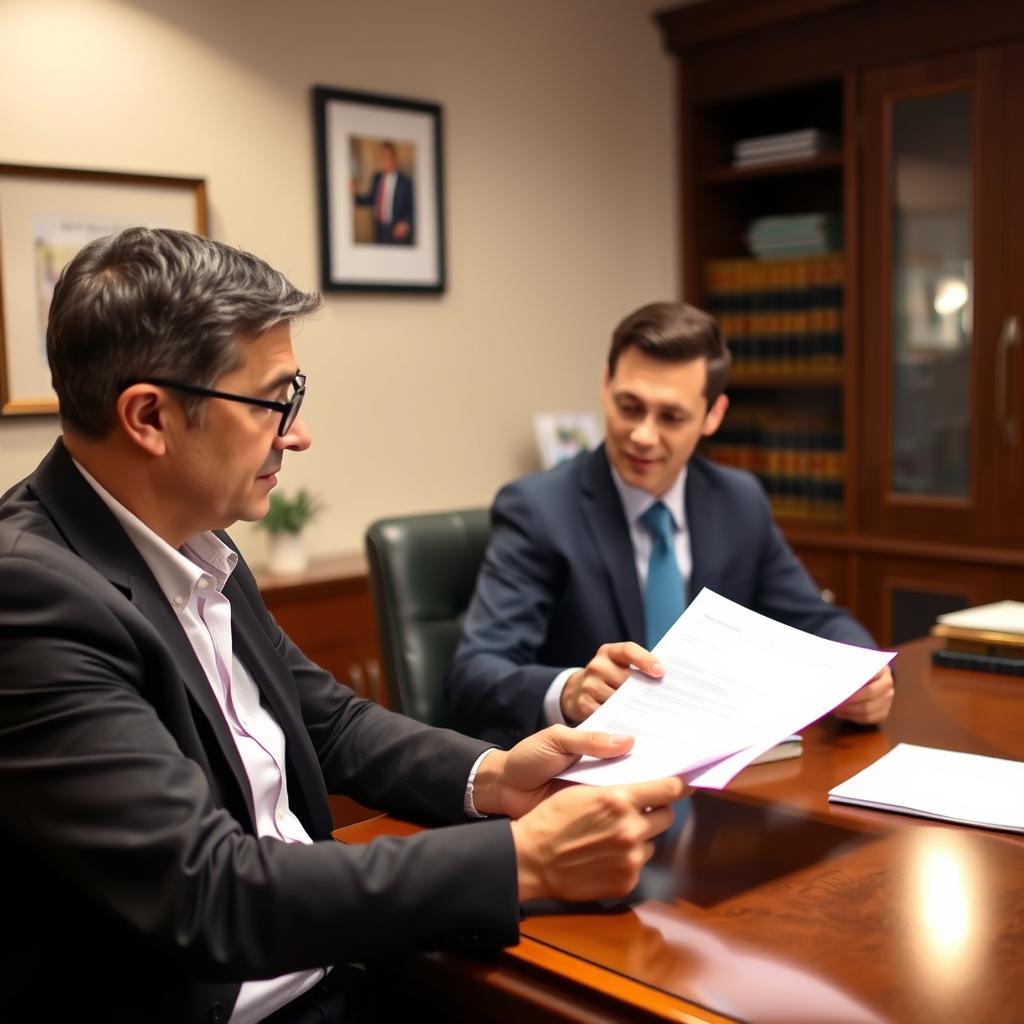
Prenuptial Agreement Lawyer Near Me
If you typed “prenuptial agreement lawyer near me” into your search bar, you are looking for a law firm that handles prenuptial agreements and is accessible to you. Law Offices Of SRIS, P.C. assists clients with prenuptial agreements across Virginia, Maryland, the District of Columbia, New Jersey, and New York. Whether you are in Fairfax County, Prince George’s County, Northern New Jersey, or anywhere else within our five-state practice area, Mr. Sris and his Of Counsel team bring extensive family-law experience to the drafting and negotiation of agreements that protect your assets and clarify financial expectations before you marry. A prenuptial agreement can address property classification, spousal support, business interests, and retirement accounts — all of which require careful handling under each state’s unique statutory framework. By working with Law Offices Of SRIS, P.C., you gain the benefit of attorneys who understand how prenuptial agreements interact with divorce, equitable distribution, and separate-property rules in multiple jurisdictions. To request a consultation and discuss whether a prenuptial agreement is right for your situation, call (888) 437-7747. Law Offices Of SRIS, P.C. – Advocacy Without Borders.
What a Prenuptial Agreement Is and How It Works
A prenuptial agreement — sometimes called a premarital agreement — is a written contract signed by two people before they marry. The agreement sets out how assets, debts, income, and other financial matters will be handled during the marriage and, if the marriage ends, how property will be divided. Under the Virginia Premarital Agreement Act (Va. Code § 20‑147 et seq.) and similar statutes in Maryland, the District of Columbia, New Jersey, and New York, a valid prenuptial agreement can override default equitable-distribution rules and provide certainty about what is separate and what is marital property. The agreement typically covers real estate, bank accounts, investment portfolios, business interests, retirement plans, and inheritances. It may also address spousal support — whether it will be paid, in what amount, and for how long — as well as the responsibility for debts brought into the marriage or incurred during it.
For the agreement to be enforced, certain formalities must be followed. Both parties must sign the agreement voluntarily and with a full understanding of the other’s financial circumstances. In many states, including Virginia, the agreement must be in writing and signed by both parties; oral prenuptial promises are generally not enforceable. A prenuptial agreement cannot contract away child-support obligations or decide custody and visitation in advance. Courts in Virginia, Maryland, DC, New Jersey, and New York each apply their own contract principles and family-law statutes when reviewing whether a prenuptial agreement is valid. Working with an attorney who understands these jurisdictional differences helps ensure the agreement is drafted to withstand later scrutiny.
How Mr. Sris and His Of Counsel Handle Prenuptial Agreement Matters
Mr. Sris and his Of Counsel approach prenuptial agreements as a planning tool — not as a prediction that the marriage will fail. The goal is to create a clear, fair document that both parties can sign with confidence. The process begins with a consultation to understand the couple’s financial picture and goals. Once the firm understands the assets, liabilities, and objectives of both parties, the attorneys prepare a draft agreement tailored to the applicable state’s requirements. They guide clients through the negotiation process, ensuring that each party has the opportunity to consult with independent counsel. In Virginia, for example, the Supreme Court has stressed the importance of full financial disclosure and the absence of duress; the firm’s experience with complex marital estates helps clients address these requirements thoroughly.
Although every state’s law differs, the core principles are similar: the agreement must be entered into voluntarily, with adequate financial disclosure, and must not be unconscionable. Mr. Sris and his Of Counsel are accustomed to handling prenuptial agreements in high-net-worth marriages, business-owner marriages, and marriages involving international assets. They work with forensic accountants and business valuators where necessary to support the disclosure process. The firm’s multi-jurisdiction reach means a client who lives in New Jersey but owns property in Virginia can feel confident that the agreement will be reviewed with both states’ laws in mind. Every prenuptial agreement is customized; there is no one-size-fits-all template.
About Mr. Sris and His Of Counsel Team
Mr. Sris, Owner and Founder of Law Offices Of SRIS, P.C., is admitted to practice in Virginia, Maryland, the District of Columbia, New Jersey, and New York. A former prosecutor, he founded the firm in 1997 and has since concentrated a significant part of his practice on family-law matters, including complex prenuptial agreements. His background in accounting and information systems gives him insight into the financial aspects of marital agreements, particularly when businesses, retirement accounts, and investments are at stake. Mr. Sris testified before the Virginia House Courts of Justice Committee in support of 2019 HB 635 (chief patron Del. David Bulova).
Mr. Sris and his Of Counsel bring over 120 years of combined legal experience. Results may vary. Every attorney who works on prenuptial agreement matters has well over a decade of practice experience. The firm has documented 4,739+ case results since 1997, serving more than 10,000 clients and earning over 100 client reviews. The Of Counsel team is made up of lawyers who are experienced in family-law practice across the firm’s five jurisdictions. Together, they assist clients with drafting, reviewing, and negotiating prenuptial agreements that align with the couple’s wishes and state law.
Frequently Asked Questions About Prenuptial Agreements
Do I need a lawyer for a prenuptial agreement?
You are not legally required to hire a lawyer to enter into a prenuptial agreement, but having experienced legal representation significantly increases the likelihood that the agreement will be properly drafted, comply with state law, and withstand a future challenge. In Virginia, Maryland, DC, New Jersey, and New York, courts scrutinize agreements for voluntariness, financial disclosure, and fairness. An attorney can help ensure all statutory requirements are met, explain your rights under the applicable state’s equitable-distribution framework, and help avoid common drafting errors that can render an otherwise sound agreement unenforceable.
What can a prenuptial agreement cover?
A prenuptial agreement can address the classification, ownership, and division of property acquired before and during the marriage, as well as spousal support obligations. Under the Virginia Premarital Agreement Act and similar laws in the firm’s other jurisdictions, the agreement may identify which assets remain separate, how marital property will be divided upon divorce or death, and whether one spouse will pay alimony to the other. It cannot determine child custody or support, and it cannot include provisions that violate public policy. India is not a signatory to the 1980 Hague Convention on Civil Aspects of International Child Abduction.
How does a prenuptial agreement work in Virginia?
In Virginia, a prenuptial agreement is governed by the Premarital Agreement Act (Va. Code § 20‑147 et seq.) and functions as a contract between the spouses that controls property division and spousal support instead of the default equitable-distribution rules found in Va. Code § 20‑107.3. The agreement must be in writing and signed by both parties. Courts enforce it unless a party proves the agreement was entered involuntarily or was unconscionable at the time of execution and the party did not have adequate knowledge of the other’s financial situation. Full financial disclosure is critical, and each party is encouraged to have independent legal advice.
Can a prenuptial agreement be challenged later?
Yes, a prenuptial agreement can be challenged in court on grounds such as fraud, duress, lack of voluntariness, failure to disclose assets, or unconscionability. The burden of proof typically falls on the party seeking to invalidate the agreement. For example, if one spouse hid significant assets before signing, the other spouse may ask the court to set aside the agreement or specific provisions. Working with separate counsel at the drafting stage, providing complete financial statements, and avoiding last‑minute pressure before the wedding are all steps that help reduce the risk of a successful challenge.
Does a prenuptial agreement protect my business?
A carefully drafted prenuptial agreement can help protect a business owned before marriage or interests acquired during the marriage by clearly designating the business as separate property and defining how any increase in value will be treated. In equitable-distribution states like Virginia and Maryland, a business started during the marriage is often considered marital property subject to division. The agreement can specify that the business remains the sole property of the owning spouse, or it can outline a formula for compensating the other spouse without disrupting operations. A business valuation may be necessary to support the agreement.
What should I bring to a consultation about a prenuptial agreement?
When you meet with an attorney about a prenuptial agreement, bring a list of your assets and debts, recent tax returns, pay stubs, business‑ownership documents, retirement‑account statements, and any existing estate‑planning documents. Having a clear picture of both parties’ financial situations allows the attorney to identify what needs to be addressed in the agreement and to advise on the disclosure requirements in your state. Also be prepared to discuss your goals — whether protecting pre‑marital property, providing for children from a prior relationship, or simply creating clarity around finances — so the attorney can craft an agreement that reflects your intentions.
For guidance on your specific situation, reach Law Offices Of SRIS, P.C. at (888) 437-7747.
Explore related legal resources:
- Virginia prenuptial agreement lawyer
- Maryland prenuptial agreement lawyer
- Washington DC prenuptial agreement lawyer
- New Jersey prenuptial agreement lawyer
- New York prenuptial agreement lawyer
Authoritative primary sources — Virginia Code Title 20 (Domestic Relations), Virginia Judicial System, Virginia State Corporation Commission.
Attorney advertising. Prior results do not guarantee a similar outcome.
Results may vary.
Case results depend on a variety of factors unique to each case.