
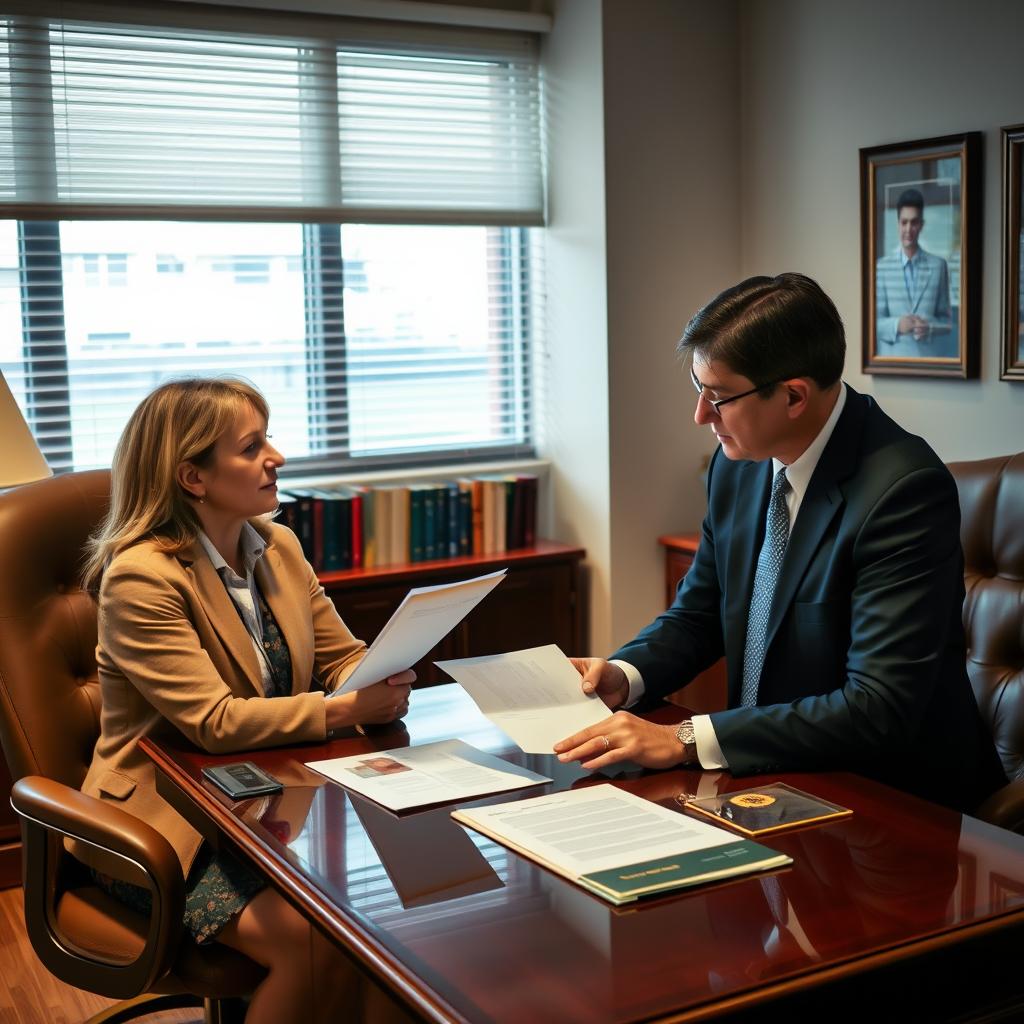
Postnuptial Agreement Lawyer Erie County, NY
Couples who married and later wish to define or alter their financial rights and responsibilities can do so through a postnuptial agreement. In New York, these agreements are enforceable under Domestic Relations Law § 236(B)(3) and general contract principles, provided they are entered into voluntarily, with full financial disclosure, and are fair at the time of execution. Mr. Sris and his Of Counsel team at Law Offices Of SRIS, P.C. assist Erie County residents in crafting, reviewing, and enforcing postnuptial agreements that address property division, spousal maintenance, and business interests. Matters are typically heard in the Erie County Supreme Court, part of the Eighth Judicial District, which has jurisdiction over matrimonial and equitable distribution claims. Whether you are considering an agreement to protect separate property, resolve financial uncertainty, or plan for the future, our firm provides experienced guidance grounded in New York law. To schedule a consultation, call (888) 437-7747. Law Offices Of SRIS, P.C. – Advocacy Without Borders.
What Postnuptial Agreements Mean in Erie County, New York
Under New York’s equitable distribution framework, marital property is divided fairly, but not necessarily equally, upon divorce. A postnuptial agreement allows spouses to override these default rules and create a customized plan for their assets and obligations. In Erie County—which includes Buffalo, Cheektowaga, Amherst, Hamburg, and surrounding communities—these agreements are often used to address real estate, retirement accounts, business ownership, and inheritance rights. Because Erie County is a major commercial and residential hub in Western New York, many families own substantial assets that benefit from clarity before any marital discord arises.
The Erie County Supreme Court, located at 25 Delaware Avenue in Buffalo, handles all matrimonial actions, including those involving postnuptial agreements. When disputes over validity or enforcement arise, the court applies a two‑part test: the agreement must have been fairly made—meaning no fraud, duress, or overreaching—and it must not be unconscionable at the time of enforcement. Full disclosure of assets and liabilities is critical, and independent legal representation for each spouse, while not mandatory, helps establish that the agreement was negotiated fairly. Mr. Sris and his Of Counsel are familiar with local court practices and can help ensure that any agreement drafted or reviewed meets New York’s requirements.
How Mr. Sris and His Of Counsel Handle Postnuptial Agreement Cases
Every postnuptial agreement matter begins with a thorough consultation to understand the couple’s goals, the nature of their assets, and any existing financial obligations. Mr. Sris and his Of Counsel explain how New York law—including the Domestic Relations Law, general contract principles, and relevant case law—applies to the specific situation. They then assist with gathering financial documents, identifying separate and marital property, and negotiating terms that reflect the couple’s shared intentions while protecting each party’s interests.
If a written agreement is needed, the team drafts clear, enforceable provisions that cover property division, spousal maintenance, and other financial matters. They also advise on the formal execution requirements—signing, acknowledgment, and the possibility of having each spouse represented by separate counsel. Should a dispute arise later, such as a claim that the agreement was procured through duress or that it is now unconscionable, Mr. Sris and his Of Counsel represent clients in settlement negotiations and, when necessary, in litigation before the Erie County Supreme Court. Throughout the process, they work to achieve practical resolutions while protecting the client’s legal rights.
About Mr. Sris and His Of Counsel Team
Mr. Sris, Owner and Founder of Law Offices Of SRIS, P.C., has practiced law since 1997 and is admitted in Virginia, Maryland, the District of Columbia, New Jersey, and New York. His background as a former prosecutor provides insight into litigation and negotiation strategies that benefit family law clients. Mr. Sris testified before the Virginia House Courts of Justice Committee in support of 2019 HB 635 (chief patron Del. David Bulova).
Mr. Sris works alongside a team of experienced Of Counsel attorneys who collectively bring over 120 years of combined legal experience and have achieved 4,739+ documented firm-wide results. Results may vary. Together, they offer comprehensive representation in postnuptial agreement matters throughout Erie County and across New York. The firm’s Buffalo location, at 50 Fountain Plaza, Suite 1400, Office No. 142, Buffalo, NY 14202, serves clients by appointment. Call (888) 437-7747 to request a consultation.
Frequently Asked Questions
What is a postnuptial agreement under New York law?
A postnuptial agreement is a written contract between spouses, made after marriage, that defines their financial rights and responsibilities during the marriage and upon separation, divorce, or death. New York law recognizes such agreements under DRL § 236(B)(3) and general contract principles. To be enforceable, the agreement must be entered into voluntarily, with full disclosure of assets and liabilities, and must not be unconscionable when enforced. Postnuptial agreements can address property division, spousal maintenance, business interests, and other financial matters, but they cannot dictate child custody or child support in a way that overrides a court’s determination of the child’s best interests.
Do I need an attorney to create a postnuptial agreement in Erie County?
New York law does not require each spouse to have a separate attorney for a postnuptial agreement to be valid, but having independent legal advice significantly strengthens the agreement against later challenges. Courts in Erie County look at whether each party had the opportunity to consult with counsel and whether the agreement was the product of free will. An attorney can help ensure that the agreement accurately reflects the couple’s intentions, complies with New York’s formal requirements, and is drafted to withstand judicial scrutiny. Mr. Sris and his Of Counsel can represent one spouse in the drafting and negotiation process.
How does a postnuptial agreement affect property division in a divorce?
A valid postnuptial agreement overrides New York’s default equitable distribution rules and governs how the couple’s property will be divided upon divorce. Instead of leaving asset classification and division to a court’s discretion, the agreement specifies which assets are separate property, how marital property will be split, and whether any spousal maintenance will be paid. As long as the agreement is found to be fair at the time it was made and is not unconscionable when enforced, the Erie County Supreme Court will generally uphold its terms. This predictability can reduce conflict and litigation costs.
Can a postnuptial agreement be challenged in court?
Yes, a postnuptial agreement can be challenged on grounds such as fraud, duress, lack of financial disclosure, or unconscionability. A party seeking to set aside the agreement must show that it was not entered into freely or that enforcement would be fundamentally unfair. For example, if one spouse hid significant assets or the agreement was signed under threat, a court may invalidate it. Mr. Sris and his Of Counsel handle both the defense and challenge of postnuptial agreements in Erie County Supreme Court, focusing on the specific facts and applicable legal standards.
What issues are commonly addressed in an Erie County postnuptial agreement?
Postnuptial agreements in Erie County typically cover the division of real estate, retirement accounts, business interests, inheritances, and the waiver or modification of spousal maintenance. Because many families in Western New York own homes, vacation properties, or family businesses, an agreement can clarify how these assets will be handled if the marriage ends. The agreement can also protect one spouse’s separate property acquired before the marriage or received as a gift. Each agreement is tailored to the couple’s unique circumstances, and careful drafting is essential to avoid future disputes.
How long does it take to finalize a postnuptial agreement?
The timeline for completing a postnuptial agreement depends on the complexity of the couple’s finances and the level of cooperation between the spouses. Some straightforward agreements can be drafted and executed within a few weeks, while more involved matters—especially those requiring business valuation, forensic accounting, or negotiation over contested terms—may take longer. The Erie County Supreme Court does not need to approve the agreement unless a dispute later arises, so the process is generally driven by the parties’ readiness and the thoroughness of the financial disclosures.
Explore our services in nearby counties: New York County (Manhattan) family law attorney, Kings County (Brooklyn) family law attorney, Queens County family law attorney, Nassau County family law attorney.
Attorney advertising. Prior results do not guarantee a similar outcome. Case results depend on a variety of factors unique to each case. Results may vary. To reach Law Offices Of SRIS, P.C., call (888) 437-7747. The firm’s Buffalo location is at 50 Fountain Plaza, Suite 1400, Office No. 142, Buffalo, NY 14202, serving clients by appointment.