
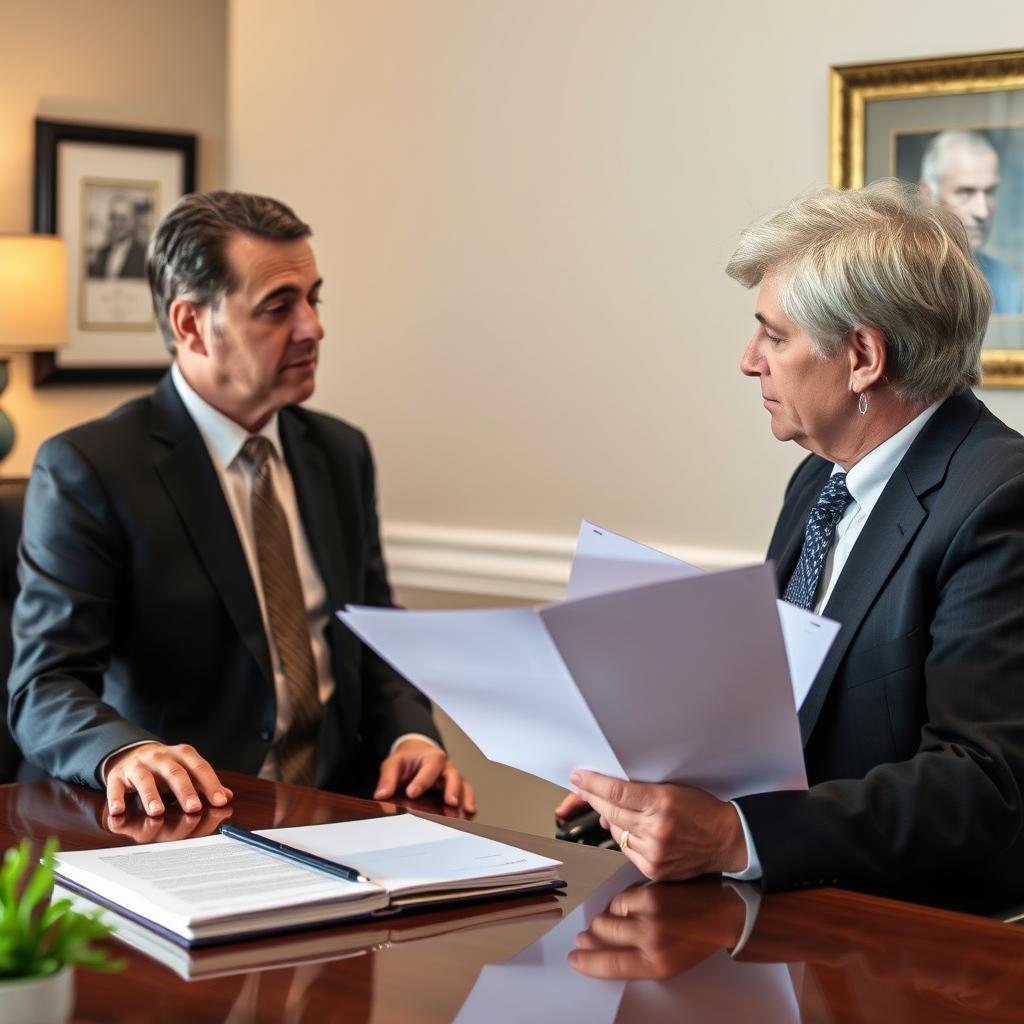
Postnuptial Agreement Lawyer Richmond County, NY
When Sarah and Michael married in front of family at a Staten Island banquet hall, they were young professionals just starting their careers. A decade later, Michael’s business has grown, and Sarah received a meaningful inheritance from her grandparents. Wanting to clarify their financial future while safeguarding what they’ve built together, they are considering a postnuptial agreement. This is a practical step many married couples in Richmond County take, and Law Offices Of SRIS, P.C. helps them navigate the process with clarity and care. Founded in 1997, our firm serves clients across New York, Virginia, Maryland, the District of Columbia, and New Jersey. Reach us at (888) 437-7747 to discuss your circumstances. Law Offices Of SRIS, P.C. – Advocacy Without Borders.
Law Offices Of SRIS, P.C. — Practicing since 1997. Admitted in Virginia, Maryland, the District of Columbia, New Jersey, and New York. (888) 437-7747
What a Postnuptial Agreement Means in Richmond County, New York
In New York, a postnuptial agreement is a contract between spouses executed after marriage that sets forth their rights and obligations regarding property, spousal maintenance, and other financial matters in the event of divorce, separation, or death. These agreements are governed by the same general principles that apply to prenuptial agreements under New York’s domestic relations and contract law. While the statutes do not provide a separate codified chapter for postnuptial instruments, the courts treat them seriously and expect that each party entered into the agreement voluntarily, with full financial disclosure, and that the resulting terms are fair at the time of enforcement.
In Richmond County, matters involving the interpretation or enforcement of a postnuptial agreement typically arise in the Supreme Court, Richmond County, which handles matrimonial actions. Judges in Staten Island will look closely at whether both spouses had the opportunity to consult independent counsel, whether any duress or overreaching occurred, and whether the economic realities of the marriage were fairly addressed. Because the legal and financial stakes are considerable, working with counsel who understands the local judicial perspective can help you craft an agreement that is more likely to withstand a challenge.
Understanding Postnuptial Agreements in New York
A postnuptial agreement differs from a prenuptial agreement only in its timing; it is made after the wedding rather than before. It can address the classification of assets as marital or separate, define how property will be divided, set or waive spousal support, and clarify responsibility for debts. The agreement cannot, however, determine child custody, visitation, or child support, as those issues remain subject to the court’s ongoing jurisdiction and must serve the child’s best interests. For many couples, a postnuptial agreement provides peace of mind by removing uncertainty and reducing the potential for costly litigation later. It can be particularly helpful when a couple’s financial situation changes significantly during the marriage—for example, one spouse starting a business, receiving an inheritance, or deciding to leave the workforce to raise children.
Options for Married Couples – What a Postnuptial Agreement Can Address
Every couple’s circumstances are unique, but a well‑drafted postnuptial agreement commonly covers one or more of the following areas:
- Property classification: Defining which assets and debts are marital and which are separate, including real estate, retirement accounts, and business interests.
- Asset distribution upon divorce: Specifying how property will be divided if the marriage ends, as an alternative to New York’s statutory equitable distribution rules.
- Spousal maintenance: Establishing the amount, duration, or even waiver of maintenance, provided the waiver is not unconscionable at the time of enforcement.
- Estate rights: Addressing rights to inherit from the other spouse, elective share, or pension plan beneficiaries, consistent with applicable law.
- Business protection: Safeguarding a closely held business from being treated as marital property subject to division.
These options allow couples to tailor a solution that fits their values and goals, rather than relying entirely on default statutory provisions. The firm’s role is to explain each option and draft an agreement that faithfully reflects the couple’s intentions while meeting New York’s legal requirements.
What to Expect When Creating a Postnuptial Agreement
The process typically begins with an initial consultation where you can describe your objectives and ask questions about the applicable law. Mr. Sris and his Of Counsel team will then help you and your spouse gather a complete picture of your respective assets, income, and liabilities. Full financial disclosure is a critical component; without it, a postnuptial agreement may be vulnerable to later attack. After both parties have had the opportunity to review the disclosure—ideally with independent legal counsel—the agreement is negotiated and drafted. The final document is executed with the same formalities as a contract, and it is essential that both spouses sign voluntarily and without coercion.
Once signed, the agreement becomes a binding contract. It is not filed with a court and remains private unless a divorce or enforcement action arises. Over the life of the marriage, the agreement can be amended or revoked by a subsequent written instrument signed by both parties, provided the amendment is also fair and entered into voluntarily.
Potential Challenges to Postnuptial Agreements
A postnuptial agreement is not immune from court scrutiny. If a divorce proceeding takes place and one spouse challenges the agreement, the court will examine whether it was the product of fraud, duress, or overreaching. It will also consider whether there was a material failure of financial disclosure, whether the agreement was unconscionable when made, and whether changed circumstances have made enforcement inequitable. The burden of proof rests on the party seeking to enforce the agreement, and a court may set aside the entire agreement or only specific provisions. Working with experienced counsel from the outset reduces the risk that the agreement will be successfully challenged later.
About Mr. Sris and His Of Counsel Team
Mr. Sris, Owner and Founder of Law Offices Of SRIS, P.C., established the firm in 1997 and is admitted to practice in Virginia, Maryland, the District of Columbia, New Jersey, and New York. A former prosecutor, he brings a thorough knowledge of courtroom procedure and negotiation to every family law matter. Mr. Sris testified before the Virginia House Courts of Justice Committee in support of 2019 HB 635 (chief patron Del. David Bulova). He and his Of Counsel team bring over 120 years of combined legal experience, with 4,739+ documented firm-wide results. Results may vary.
Frequently Asked Questions
Is a postnuptial agreement valid in Richmond County, New York?
Yes, a postnuptial agreement is valid in New York if it is entered into voluntarily, with full financial disclosure, and the terms are fair at the time of enforcement. Courts in Richmond County will uphold such agreements when both parties were aware of each other’s financial circumstances and had the opportunity to consult independent counsel. If a challenge is raised during a divorce, the court will examine whether the agreement meets these fundamental requirements rather than automatically assuming it is enforceable.
Do I need a lawyer to draft a postnuptial agreement in Staten Island?
You are not legally required to have a lawyer, but working with experienced counsel helps ensure your agreement is legally sound and less vulnerable to later challenge. An attorney can guide you through New York’s disclosure obligations, help you negotiate terms that protect your interests, and make certain the agreement withstands judicial scrutiny. Because spouses often have overlapping interests, each party should ideally be represented by independent counsel to avoid claims of duress or overreaching.
What happens if my spouse and I cannot agree on terms for a postnuptial agreement?
If negotiations stall, you do not need to abandon the process—an attorney can help you identify creative solutions and clarify the pros and cons of remaining unresolved. The goal is a mutually acceptable agreement, not a win‑lose contest. In some situations, mediation or collaborative law approaches can help couples find common ground. If no agreement is possible, the couple will simply remain bound by New York’s statutory default rules, which may or may not align with their financial goals.
Can a postnuptial agreement address spousal support in New York?
Yes, a postnuptial agreement can set, limit, or waive spousal maintenance, provided the waiver is not unconscionable at the time of enforcement. The court will scrutinize a waiver of support carefully, particularly if one spouse would be left destitute while the other retains substantial assets. Crafting a fair and reasonable maintenance provision that reflects both spouses’ present and foreseeable circumstances is essential to the agreement’s enforceability.
How long does it take to finalize a postnuptial agreement in Richmond County?
The timeframe depends on the complexity of your finances, the level of cooperation between spouses, and each party’s need for independent legal review. Some agreements can be completed in a matter of weeks, while more complex situations may require several months. Because the process is private and does not involve court filings, the pace is largely driven by the parties themselves.
What if my spouse already signed a postnuptial agreement under pressure?
If a postnuptial agreement was signed under duress or without full knowledge of the other spouse’s assets, it may be challenged in court and partially or entirely set aside. New York courts take coercion and concealment seriously and will not enforce an agreement that results from overbearing tactics. If you believe your agreement is unfair, an attorney can evaluate its validity and advise on the available remedies, which might include seeking to void the agreement or renegotiate its terms.
For a more detailed breakdown of New York’s postnuptial agreement statutes and the firm’s approach, see our comprehensive analysis at Law Offices Of SRIS, P.C.
Law Offices Of SRIS, P.C.
50 Fountain Plaza, Suite 1400, Office No. 142, Buffalo, NY 14202
Phone: (888) 437-7747
By appointment only. Call to schedule.
Attorney advertising. Prior results do not guarantee a similar outcome.
Case results depend on a variety of factors unique to each case.
Results may vary.