
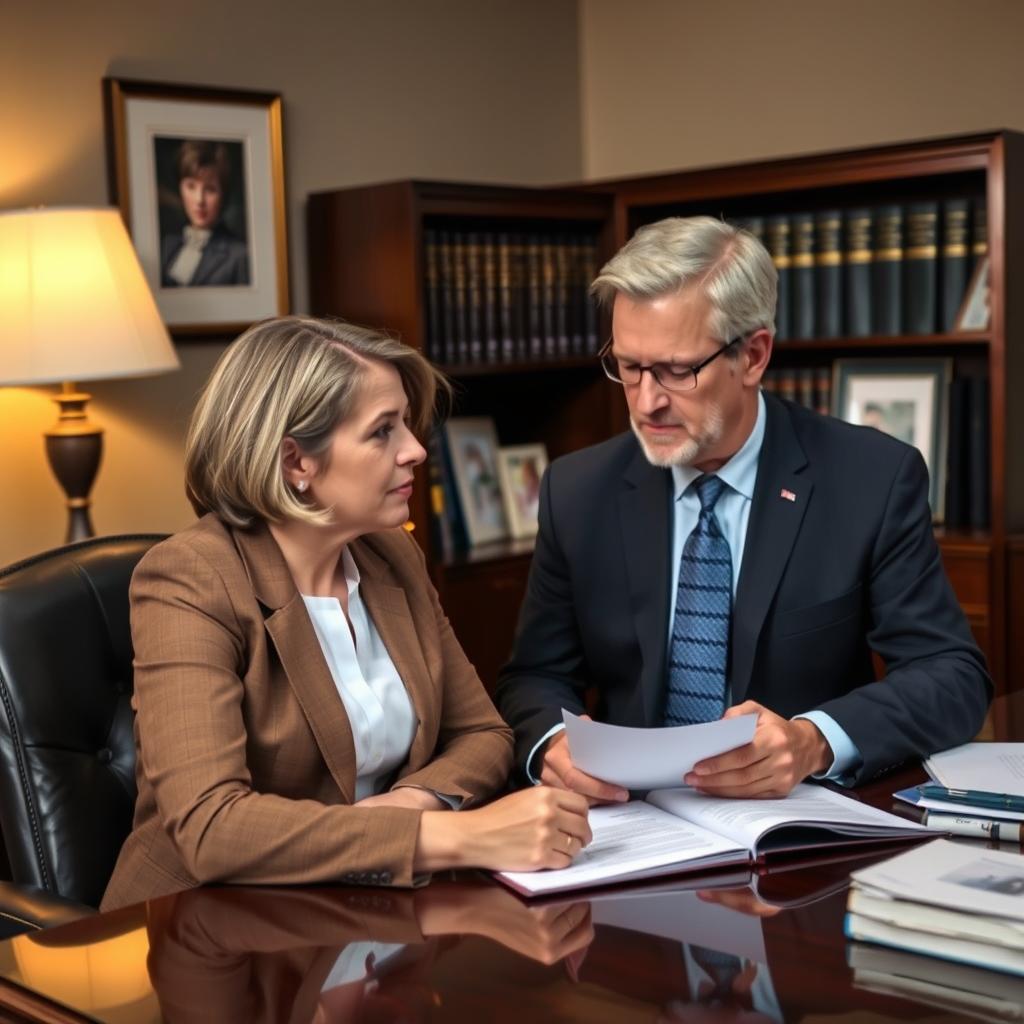
Postnup Lawyer Lexington, VA
Postnuptial agreements allow married couples in Virginia to define property rights, spousal support obligations, and other financial matters in the event of separation, divorce, or death. In Lexington—a community shaped by the presence of Virginia Military Institute and Washington and Lee University—many couples seek to clarify their financial futures after marriage. Law Offices Of SRIS, P.C., founded in 1997, concentrates its family law practice on drafting, negotiating, and enforcing postnuptial agreements that comply with the Virginia Premarital Agreement Act. Mr. Sris and his Of Counsel team bring extensive experience in Virginia equitable distribution, and they regularly appear in the Lexington Circuit Court and the Lexington Juvenile and Domestic Relations District Court when postnuptial disputes arise. Whether you are considering a postnuptial agreement to protect a business, secure an inheritance, or plan for a high‑net‑worth estate, the firm provides individualized legal analysis. Reach our location at (888) 437‑7747 to request a consultation. Law Offices Of SRIS, P.C. – Advocacy Without Borders.
What Postnuptial Agreements Mean in Lexington, Virginia
Under Virginia law, a postnuptial agreement is governed by the same statutory framework that applies to premarital agreements—chiefly the Virginia Premarital Agreement Act, codified at Va. Code § 20‑147 et seq. A valid postnuptial agreement must be in writing and signed by both spouses. The Act permits couples to decide the disposition of property, the allocation of debt, the right to seek or waive spousal support, and other economic matters. Because Virginia is an equitable distribution state, a postnuptial agreement can override the default rules that a court would otherwise apply under Va. Code § 20‑107.3. For Lexington residents, that means an enforceable postnuptial agreement can bring clarity and reduce the uncertainty that often accompanies a contested divorce.
Postnuptial agreements are frequently used by couples who experienced a significant change in circumstances after the wedding—such as receiving a family business, starting a professional practice, or accumulating substantial retirement assets. In Lexington, where families often have ties to the university or the military, these agreements can address unique concerns like service‑member benefits under federal law, business valuations, and the classification of pre‑marital assets. The Lexington Circuit Court, located at 2 South Main Street, has jurisdiction over all equitable distribution matters under Virginia law. A well‑drafted agreement presented in that court can save a family from prolonged litigation, provided it meets the statutory requirements of voluntariness, fairness, and full disclosure. Mr. Sris and his Of Counsel have drafted postnuptial agreements for clients throughout the Shenandoah Valley and can advise whether an existing agreement is likely to be enforced under current Virginia precedent.
How Mr. Sris and His Of Counsel Handle Postnuptial Agreement Cases
When a prospective client contacts Law Offices Of SRIS, P.C., the process begins with a confidential consultation to understand the couple’s goals, the nature of their assets, and any concerns about enforceability. Mr. Sris and his Of Counsel then explain how Virginia’s statutory factors would likely apply to the specific financial picture. If both spouses intend to negotiate an agreement collaboratively, the firm can prepare an initial draft, facilitate discussions between the parties or their separate counsel, and revise the language until it accurately reflects the negotiated terms. Throughout this stage, the attorneys focus on full financial disclosure—an essential element under Va. Code § 20‑151—to reduce the risk of a later challenge.
When a postnuptial dispute cannot be resolved outside of court, the firm is prepared to litigate in the Lexington Circuit Court or the Lexington Juvenile and Domestic Relations District Court, depending on the nature of the claims. The team’s familiarity with local court practices, including motion scheduling and evidentiary hearings, allows them to present a clear argument about why the agreement should—or should not—be enforced. Because every case is different, the firm does not promise a particular timeline, but it does commit to moving each matter forward efficiently while keeping the client informed. Mr. Sris and his Of Counsel also handle post‑judgment modifications and enforcement of existing postnuptial agreements, including situations where a spouse has relocated out of state.
About Mr. Sris and His Of Counsel Team
Mr. Sris, Owner and Founder of Law Offices Of SRIS, P.C., has practiced family law since 1997 and is admitted in Virginia, Maryland, the District of Columbia, New Jersey, and New York. He is a former prosecutor whose trial experience informs his approach to contested postnuptial agreement disputes. Mr. Sris testified before the Virginia House Courts of Justice Committee in support of 2019 HB 635 (chief patron Del. David Bulova). Together with his Of Counsel, the firm brings over 120 years of combined legal experience. Results may vary. Mr. Sris and his Of Counsel have documented 4,739+ case results across all practice areas since 1997.
Frequently Asked Questions
What is a postnuptial agreement in Virginia?
A postnuptial agreement is a written contract between spouses, executed after marriage, that decides property division, spousal support, and other financial matters if the marriage ends. Under the Virginia Premarital Agreement Act (Va. Code § 20‑147 et seq.), the same rules that govern prenuptial agreements apply to postnuptial contracts. The agreement must be signed by both parties and made voluntarily with full financial disclosure. It cannot determine child custody or child support, as those issues remain subject to a court’s best‑interests review. For Lexington couples, a properly drafted postnuptial agreement offers financial clarity and can reduce conflict if the parties later decide to divorce or separate.
Are postnuptial agreements enforceable in Virginia?
Yes, a postnuptial agreement is enforceable in Virginia as long as it meets statutory requirements: it must be in writing, signed, voluntarily entered, and not unconscionable when executed. The spouse seeking to enforce the agreement must show that the other party entered it freely, with a reasonable opportunity to consult independent counsel, and that there was no coercion. If a court finds that one spouse did not fully disclose assets or that the terms are grossly unfair, the agreement may be set aside in whole or in part. Mr. Sris and his Of Counsel emphasize full financial transparency during the drafting phase to maximize the likelihood that a Lexington Circuit Court will uphold the agreement.
When should a couple consider a postnuptial agreement in Lexington?
Couples in Lexington often consider a postnuptial agreement after a major financial event—such as starting a business, receiving an inheritance, or discovering a significant change in one spouse’s income or debt. Military families connected to VMI or other service branches may also use a postnuptial agreement to address federal pension rights or survivor benefits. Even without a triggering event, some spouses simply want to confirm the property‑classification rules they prefer rather than relying on Virginia’s default equitable distribution statute. The firm can help evaluate whether a postnuptial agreement would clarify your situation, and we typically serve clients at our Shenandoah Location at 505 N Main Street, Suite 103, Woodstock, VA 22664, with consultations available by appointment.
Can a postnuptial agreement be modified after it is signed?
Yes, a postnuptial agreement can be modified or revoked, but only by a subsequent written agreement signed by both spouses. Virginia law does not permit oral modifications. If the parties later reconcile or their circumstances change, they can execute an amendment that specifically references the original agreement. The same formalities—full disclosure, voluntariness, and a signed writing—apply. When a dispute arises about whether an amendment is valid, the court will examine the circumstances at the time the amendment was signed, not at the time of the original agreement. The firm regularly drafts amendments and revocations for couples who need to update their financial arrangements.
What happens if a postnuptial agreement is challenged during a divorce?
If one spouse challenges a postnuptial agreement during a divorce, the Lexington Circuit Court will hold an evidentiary hearing to decide whether the agreement is valid and enforceable. The spouse defending the agreement must present evidence that it was entered voluntarily, with adequate disclosure of assets, and that the terms are not unconscionable. The challenging spouse may argue that they were pressured to sign, that they did not understand the financial implications, or that the agreement produces an result so unfair that it shocks the conscience. The court has the power to enforce the agreement in full, strike certain provisions, or set it aside entirely. Because these challenges can be fact‑intensive, retaining an attorney with experience in Virginia equitable distribution and postnuptial litigation is important. Mr. Sris and his Of Counsel have litigated numerous enforcement and avoidance actions in Virginia circuit courts.
Do I need a lawyer to draft a postnuptial agreement in Virginia?
Virginia law does not require a party to retain a lawyer to draft a postnuptial agreement, but each spouse is strongly encouraged to seek independent legal advice to ensure the agreement will be enforced. An agreement drafted without legal guidance is more vulnerable to claims that one spouse did not understand their rights or that critical statutory requirements were missed. Because Virginia’s equitable distribution scheme involves complex classification of marital and separate property under Va. Code § 20‑107.3, an attorney can help identify all assets and structure the agreement to withstand judicial scrutiny. For a consultation with an experienced postnuptial agreement lawyer serving Lexington, reach Law Offices Of SRIS, P.C. at (888) 437‑7747.
Additional family law resources:
Fairfax County family lawyer ·
Fairfax City family lawyer ·
Falls Church family lawyer ·
Prince William County family lawyer ·
Manassas family lawyer
Primary authority:
Virginia Code Title 20 (Domestic Relations) ·
Lexington Circuit Court ·
Virginia Court System
Attorney advertising. Prior results do not guarantee a similar outcome.
Case results depend on a variety of factors unique to each case.