
Postnuptial Agreement Lawyer King William County, VA
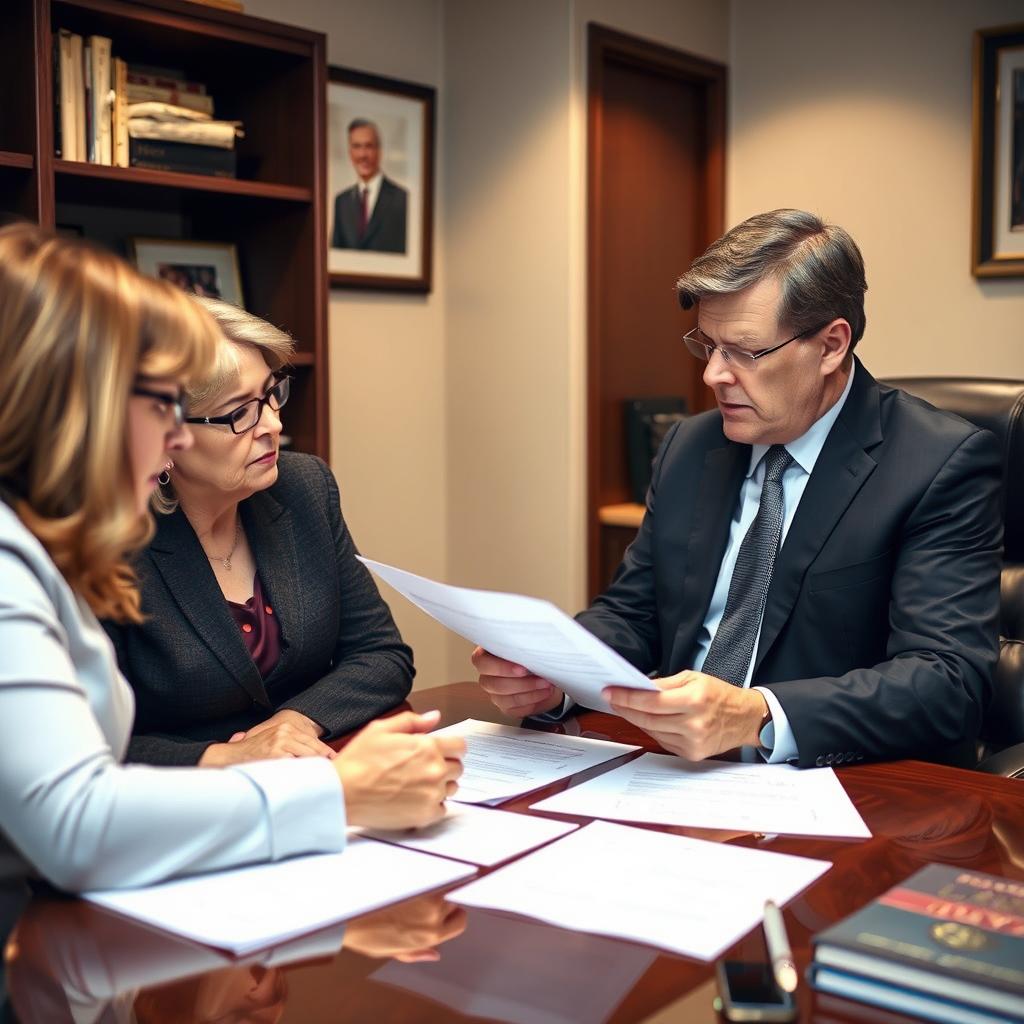
When Rachel and Michael married, they thought their financial picture was settled. Michael had a modest business in West Point, and Rachel was building a career in Aylett. Five years later, the business had grown beyond what either of them had anticipated, and with it came questions neither had considered on their wedding day. Who should receive the business if they divorced? How would equity in the Aylett property be handled if circumstances changed? That is when they reached out to Law Offices Of SRIS, P.C. for a postnuptial agreement—a legal tool that allows married couples in King William County to clarify property rights and financial responsibilities without waiting for a separation. Mr. Sris and his Of Counsel have helped couples across King William, West Point, and the surrounding rural communities formalize their understandings. To explore whether a postnuptial agreement is right for your situation, reach our firm at (888) 437-7747. Law Offices Of SRIS, P.C. – Advocacy Without Borders.
How Mr. Sris and His Of Counsel Handle Postnuptial Agreements
Postnuptial agreements are governed by Virginia’s Premarital Agreement Act, which applies with equal force to agreements made after marriage. The law permits spouses to define their rights in property, support, and even the disposition of business interests, provided the agreement is entered into voluntarily and does not push a spouse to the point of being left reliant on public assistance. Mr. Sris and his Of Counsel approach each case by first understanding the couple’s goals—whether it is insulating a family business, protecting an inheritance, or clarifying ownership of assets purchased before or during the marriage. The agreement is then drafted to reflect those intentions, with careful attention to Virginia’s equitable distribution framework so that, should the agreement ever be challenged in the King William County Circuit Court, it stands on solid ground.
Because postnuptial agreements often involve sensitive conversations, Mr. Sris and his Of Counsel encourage open communication and may recommend that each spouse obtain independent legal review to reinforce the agreement’s enforceability. The firm’s Richmond location serves clients throughout the Ninth Judicial District, including those appearing at 351 Courthouse Lane, King William, VA 23086. Matters reach the King William County Juvenile and Domestic Relations District Court only if there is a simultaneous child-related dispute; otherwise, the Circuit Court retains authority over property and support terms.
What You Can Expect When Creating a Postnuptial Agreement
The process typically begins with a detailed conversation about your marital property, separate property, and future intentions. Mr. Sris and his Of Counsel will explain how Virginia courts classify assets under Va. Code § 20-107.3 and how a well-drafted agreement can override the default equitable distribution factors. You will then review a written draft, ask questions, and make revisions until the document accurately captures the shared understanding. Once both spouses have signed freely and with full disclosure, the agreement becomes binding.
In King William County, enforcement issues may arise years later during a divorce or separation proceeding. If a spouse alleges fraud, duress, or unconscionability, the Circuit Court evaluates the agreement at a hearing. Mr. Sris and his Of Counsel prepare each agreement with the expectation that a judge will scrutinize it, so every document is built to withstand such review. Throughout the process, you remain in control of the timeline; the court is involved only if a dispute develops, not during the agreement’s creation.
Consequences When a Postnuptial Agreement Fails
Should a party challenge the postnuptial agreement and the court finds it invalid, the parties revert to Virginia’s equitable distribution rules. The court will classify, value, and divide property based on eleven statutory factors, which may produce a result neither spouse wanted. A business interest built after marriage, for example, could be treated as marital property and subjected to division. By contrast, a standing postnuptial agreement can preserve the business as separate property, shield an inheritance, and determine spousal support on the couple’s terms. For families in King William County, where many estates involve farmland, small enterprises, or inherited parcels along Route 30 and Route 360, the difference between a valid agreement and a court-imposed outcome can reshape a family’s financial future.
About Mr. Sris and His Of Counsel Team
Mr. Sris, Owner and Founder of Law Offices Of SRIS, P.C., has practiced law since 1997. As a former prosecutor, he brings a disciplined, case-focused perspective to family law matters, including the drafting of marital agreements. He is admitted in Virginia, Maryland, the District of Columbia, New Jersey, and New York. Mr. Sris testified before the Virginia House Courts of Justice Committee in support of 2019 HB 635 (chief patron Del. David Bulova). Together with his Of Counsel, Mr. Sris and his Of Counsel bring over 120 years of combined legal experience, with 4,739+ documented firm-wide results. Results may vary.
Frequently Asked Questions About Postnuptial Agreements in King William County
Do I need a lawyer to draft a postnuptial agreement in Virginia?
Virginia law does not require you to hire a lawyer to create a postnuptial agreement, but working with an attorney helps ensure the document is enforceable and clearly reflects your intentions. Because the agreement can override automatic property rights and spousal support entitlements, a court will examine whether both spouses entered into it voluntarily and with full knowledge of each other’s finances. Independent legal review for each spouse is a factor that courts consider favorably when evaluating enforceability.
What property can a postnuptial agreement cover in King William County?
A postnuptial agreement can address almost any property or financial matter, including the classification of business assets, real estate, retirement accounts, and the right to seek spousal support. It cannot dictate child custody or child support, as those determinations remain subject to the best interests of the child under Va. Code § 20-124.3. For King William County families with agricultural land, commercial property along Route 33, or family businesses in West Point, the agreement can be tailored to protect those specific assets.
Will the King William County court automatically enforce our postnuptial agreement?
A Virginia court will enforce a postnuptial agreement if it was made voluntarily, with fair and reasonable disclosure of assets and obligations, and its terms are not unconscionable at the time of enforcement. If either spouse challenges the agreement later, the King William County Circuit Court may hold a hearing to examine the circumstances of its signing. Mr. Sris and his Of Counsel draft agreements with these enforceability standards in mind, including recitals of full disclosure and separate signature acknowledgments.
How is a postnuptial agreement different from a separation agreement?
A postnuptial agreement is made while spouses are still living together and intend to remain married, whereas a separation agreement is executed when they have decided to separate or divorce. The postnuptial agreement controls how assets would be divided if a divorce occurs later; the separation agreement resolves current issues during the separation period. Both are governed by Virginia’s statutory framework, but the timing and purpose differ.
Can we change a postnuptial agreement after it is signed?
Yes, spouses can modify a postnuptial agreement by executing a written amendment or by revoking the existing agreement and creating a new one. Modifications should follow the same formalities as the original agreement, including voluntary execution, full disclosure, and mutual assent. A couple whose circumstances have evolved—perhaps after buying a new property or welcoming a child—can work with their attorney to update the document so it stays aligned with their current situation.
What if my spouse refuses to sign a postnuptial agreement?
No one can be compelled to sign a postnuptial agreement; it is a voluntary contract. If your spouse is unwilling, you might consider open discussions about your concerns and the benefits of clarifying financial expectations. Some couples find that the conversation itself reduces future conflict. If you cannot reach an agreement, the default Virginia equitable distribution laws will control in the event of divorce.
How do I get started with a postnuptial agreement in King William County?
Reach our firm at (888) 437-7747 to schedule a consultation with Mr. Sris and his Of Counsel. We will discuss your marital property, your goals for the agreement, and the legal standards that apply. From there, we can draft a document that fits your family and your future. The firm’s Richmond location is available by appointment, and we represent clients throughout the King William County area.
Does Virginia’s equitable distribution law impact a postnuptial agreement?
A valid postnuptial agreement supersedes the default equitable distribution rules, allowing couples to decide their own property division rather than rely on the court’s eleven-factor analysis. However, if the agreement is set aside, the court will apply Va. Code § 20-107.3 to classify and divide property. That is why careful drafting and full disclosure are crucial.
Are there any time limits for creating a postnuptial agreement?
There is no statutory deadline within which a postnuptial agreement must be signed; spouses may create one at any point during their marriage. The key is that both must still be willing to sign. Waiting until a divorce is imminent may raise questions about the voluntariness of the agreement, so it is often best to address the matter when relations are amicable.
What makes a postnuptial agreement unconscionable in Virginia?
Unconscionability generally means the agreement is so one-sided that it shocks the conscience of the court, considering the circumstances at the time of enforcement and the parties’ relative positions. Factors may include gross disparity in assets, failure to disclose material information, or terms that would leave one spouse unable to meet basic needs. Mr. Sris and his Of Counsel structure every agreement to avoid crossing that threshold.
Can a postnuptial agreement address spousal support in King William County?
Yes, a postnuptial agreement can modify or waive spousal support, provided the waiver is made with full awareness and does not render a spouse destitute. Virginia law allows couples to opt out of the statutory support framework, but courts will review the fairness of that decision if challenged. For couples in King William, West Point, and Aylett, a well-crafted support clause can prevent protracted litigation later.
Do we need to go to court to create a postnuptial agreement?
No court appearance is necessary to create a postnuptial agreement; it is a private contract between spouses. The King William County Circuit Court becomes involved only if the agreement is later challenged during a divorce or separate proceeding. Mr. Sris and his Of Counsel handle all drafting and negotiation outside of court.
For guidance on your specific situation, reach Law Offices Of SRIS, P.C. at (888) 437-7747.
Additional resources:
Fairfax County family law representation ·
Fairfax City family law lawyer ·
Falls Church family law attorney ·
Prince William County family law practice ·
Manassas City family law services
Virginia Code Title 20 – Domestic Relations ·
King William County Circuit Court ·
Virginia’s Judicial System
Attorney advertising. Prior results do not guarantee a similar outcome. Case results depend on a variety of factors unique to each case. Results may vary.