
Prenuptial Agreement Lawyer Rappahannock County, VA
A young couple in Flint Hill plans to marry next spring. She owns a historic bed-and-breakfast near the Shenandoah National Park boundary; he has a growing contracting business headquartered in Washington. Both want to protect the assets they have each built before the wedding while building a future together. A prenuptial agreement drawn under Virginia’s Premarital Agreement Act (Va. Code § 20‑147 et seq.) can clearly designate those separate holdings, set forth each spouse’s rights to property acquired during the marriage, and help avoid court‑driven property division later. For guidance tailored to families, farms, and small businesses across Rappahannock County, reach Law Offices Of SRIS, P.C. at (888) 437‑7747.
Strategy Options
Drafting a prenuptial agreement in Virginia means working within an equitable‑distribution state where, absent an agreement, a court will divide marital property based on a list of statutory factors under Va. Code § 20‑107.3. Mr. Sris and his Of Counsel approach each prenuptial agreement as a custom plan. The first step is identifying which assets and debts each party wants to keep as separate property—family farmland, a business interest, an inheritance, or retirement accounts. The agreement can also define how future income, business appreciation, or real‑estate purchases will be classified. Because Virginia law requires that prenuptial agreements be entered into voluntarily, with fair and reasonable disclosure of each party’s financial situation, Mr. Sris and his Of Counsel build a record of full transparency and independent legal advice. They also work with couples who already have a separation or property‑settlement agreement and need to reaffirm those terms in a marital agreement before proceeding with a divorce.
What To Expect
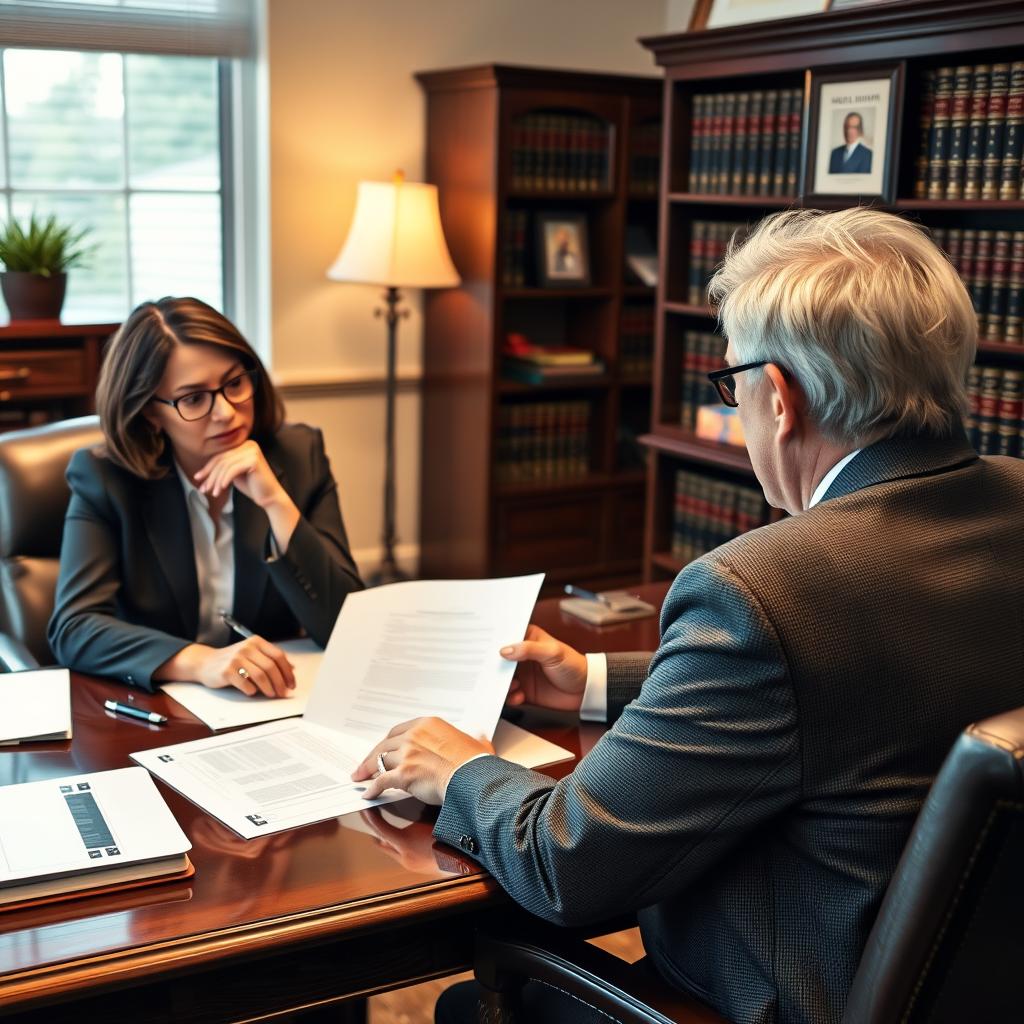
The process usually begins with a confidential consultation at our Fairfax location or by phone. Mr. Sris and his Of Counsel listen to your goals—whether you want to protect a multi‑generational farm, a professional practice, or simply bring clarity to finances. You will be asked to gather a complete picture of your assets and liabilities, which the legal team then organizes into a draft agreement. Both parties should have separate legal counsel review the document; the Rappahannock County Circuit Court, which handles divorce and equitable‑distribution matters at 250 Gay Street in Washington, will later scrutinize an agreement for voluntariness and fairness. After both sides have signed and the agreement is notarized, it becomes a binding contract that overrides the default equitable‑distribution rules. While no one anticipates a divorce, having this framework in place can eliminate months of costly litigation and protect children’s inheritances or a family business from forced sale.
Risks of Not Having a Prenuptial Agreement
Without a valid prenuptial agreement, Virginia’s equitable‑distribution statute controls how property is divided in a divorce. Under Va. Code § 20‑107.3, the court classifies everything as either separate (pre‑marital, gifts, inheritances) or marital (acquired during the marriage) and then distributes the marital property after weighing factors that include the length of the marriage, each spouse’s contributions, and the circumstances that led to the divorce. A family business that grew during the marriage could be partially reclassified as marital, forcing a buy‑out or even a sale. A prenuptial agreement that meets the standards of the Premarital Agreement Act removes that uncertainty by allowing the spouses to define their own rules. It can also address spousal support obligations, protect one party from assuming the other’s pre‑existing debts, and preserve retirement benefits. Couples who overlook this step often find themselves in front of a Rappahannock County judge with much less control over the final outcome.
Attorney Credentials
Mr. Sris, Owner and Founder of Law Offices Of SRIS, P.C., has practiced since 1997 and is admitted in Virginia, Maryland, the District of Columbia, New Jersey, and New York. He is a former prosecutor who brings a disciplined, evidence‑focused approach to family‑law planning. Mr. Sris testified before the Virginia House Courts of Justice Committee in support of 2019 HB 635 (chief patron Del. David Bulova), a bill that revised the equitable‑distribution provisions of Va. Code § 20‑107.3. Mr. Sris and his Of Counsel bring over 120 years of combined legal experience and have achieved 4,739+ documented firm-wide results. Results may vary. For a full statutory breakdown of Virginia prenuptial agreement law, see our comprehensive analysis.
Frequently Asked Questions
Do I need a lawyer for a prenuptial agreement in Rappahannock County?
Yes, each party should have independent legal representation to ensure the agreement is voluntary and based on full financial disclosure. Under Virginia law, a prenuptial agreement must be entered into freely and with a reasonable knowledge of the other party’s assets. When both sides have separate counsel, a court in Rappahannock County Circuit Court is much less likely to later set the agreement aside on grounds of duress or concealment. Mr. Sris and his Of Counsel can advise on the enforceability of the terms and help both parties understand exactly what rights they are giving up or protecting.
What can a prenuptial agreement cover in Virginia?
A prenuptial agreement can identify separate and marital property, define how property will be divided in a divorce, address spousal support, and protect business interests or family inheritances. The agreement cannot determine child custody or child support, as those issues are governed by the child’s best interests. India is not a signatory to the 1980 Hague Convention on Civil Aspects of International Child Abduction. It may, however, establish a framework for classifying future income, real‑estate purchases, retirement‑plan growth, and even the payment of attorney fees. Our team ensures the document complies with Va. Code § 20‑147 et seq. So that it will be enforced if a marriage ends.
Can a prenuptial agreement be challenged later?
Yes, an agreement can be challenged on grounds such as fraud, duress, lack of voluntary execution, or unconscionability at the time of enforcement. Virginia courts will look at whether there was adequate financial disclosure, whether both parties had the opportunity to consult independent counsel, and whether the terms were fair when signed—not just at divorce. If the agreement was put together hastily or under pressure, a Rappahannock County judge may set it aside. Working with experienced family‑law counsel from the start significantly reduces the risk of a successful challenge.
How much does a prenuptial agreement cost?
The cost varies depending on the complexity of the estate, the number of assets involved, and the time required for negotiation and drafting. A straightforward agreement for a couple with modest assets and clear wishes will be less expensive than one involving multiple businesses, international property, or extensive support provisions. Mr. Sris and his Of Counsel can discuss fee structures during the initial consultation. Contact us at (888) 437‑7747 to discuss your situation and receive a case‑specific estimate.
Is a postnuptial agreement the same as a prenuptial agreement?
No; a postnuptial agreement is entered into after marriage, while a prenuptial agreement is signed before the wedding. Both types of agreements serve similar purposes—defining property rights and spousal support expectations—but Virginia courts scrutinize postnuptial agreements even more closely because the parties owe each other fiduciary duties once married. A couple who missed the opportunity for a prenuptial agreement can still create a legally binding marital agreement; our practice handles both pre‑ and post‑marital planning.
What if we get divorced in another state—will our Virginia prenup still hold?
A properly executed Virginia prenuptial agreement is generally given full faith and credit by courts in other states, but a few jurisdictions apply their own public‑policy review. Because the agreement is a contract, most states will enforce its terms if they do not violate that state’s strong public policy. For couples who may relocate, we build extra safeguards into the document to increase the likelihood of enforcement across state lines. If a divorce is filed in a state with very different divorce laws, Mr. Sris and his Of Counsel can collaborate with local counsel to argue for the agreement’s validity.
How does the process differ if we already have a separation agreement?
If you have an existing separation agreement, it can serve as the foundation for a marital settlement agreement in a subsequent divorce, but it will not automatically function as a prenuptial agreement for a remarriage. A separation agreement resolves issues only for a particular divorce proceeding. If you plan to remarry and want to carry forward certain property arrangements, you need a new prenuptial agreement that explicitly incorporates those terms and reaffirms the classification of separate property. Mr. Sris and his Of Counsel frequently help clients navigate the transition from a separation agreement to a premarital contract.
Speak With a Prenuptial Agreement Lawyer Serving Rappahannock County
To arrange a confidential consultation, call (888) 437‑7747 or reach out through our website. Mr. Sris and his Of Counsel meet with clients at our Fairfax location or by phone, and evening or weekend appointments are available by request. We welcome the opportunity to discuss how a prenuptial agreement can protect what matters most to you.
Fairfax Location
4008 Williamsburg Court
Fairfax, VA 22032
(703) 636‑5417
By appointment. Call (888) 437‑7747 to schedule.
Attorney advertising. Prior results do not guarantee a similar outcome.
Results may vary.
Case results depend on a variety of factors unique to each case.